New flooring touches every room you walk through every single day. It is also one of the easiest renovation decisions to budget incorrectly. Homeowners across Fairfax County, Chantilly, Vienna, McLean, and the rest of Northern Virginia often start with a simple question when planning a flooring project. How much does flooring actually cost per square foot, and which material makes sense for their home?
The honest answer depends on more than the price tag on a box of planks. Labor rates in Northern Virginia affect the final number. So do the age and condition of your subfloor, the room the flooring is going into, and the local climate. This guide breaks down real 2026 pricing by material. It also explains the hidden costs most estimates leave out and walks through which flooring option performs best in a Northern Virginia home. That includes the humidity swings and older housing stock common in areas like Chantilly and Fairfax County.
What Determines Flooring Cost in Northern Virginia
Before comparing materials, it helps to understand what actually drives the price of a flooring project in this region.
Material Type and Grade
Flooring cost starts with the product itself. Solid hardwood, engineered hardwood, luxury vinyl plank (LVP), porcelain tile, natural stone, laminate, and carpet all sit at different price points. Within each category, you’ll find a wide range between builder-grade and premium options.
Labor and Installation Complexity
Northern Virginia labor rates run higher than the national average, and installation complexity changes the bill significantly. A straight plank installation in an open room costs less per square foot than a herringbone pattern. The same goes for a tile layout with a lot of cuts or a curved staircase transition.
Home Age and Subfloor Condition
Much of Northern Virginia’s housing stock dates to the 1960s through the early 2000s, so uneven subfloors, squeaky joists, and old adhesive residue are common. Homeowners frequently underestimate subfloor repair costs in a flooring budget.
Square Footage and Room Layout
Larger, open rooms install faster per square foot than choppy layouts with closets, hallways, and multiple room transitions. More doorway thresholds and directional changes mean more labor time and material waste.
Removal and Disposal of Old Flooring
Contractors often quote pulling up old carpet, tile, or hardwood, and hauling it away, as a separate line item. Tile removal in particular is labor intensive because it usually damages the subfloor underneath.
Flooring Cost Per Square Foot in Northern Virginia (2026 Pricing)
Here is what homeowners in the region are typically paying, installed, as of 2026. These figures include material and labor but not subfloor repair or extensive removal work.
| Flooring Type | Total Installed / Per Sq Ft |
|---|---|
| Laminate Flooring | $8 – $12 |
| Luxury Vinyl Plank (LVP) | $9 – $14 |
| Engineered Hardwood | $13 – $22 |
| Solid Hardwood | $16 – $26 |
| Ceramic / Porcelain Tile | $18 – $33 |
| Natural Stone Tile | $27 – $50 |
| Carpet | $6 – $12 |
Hardwood Flooring Cost
Solid hardwood generally runs $16 to $26 per square foot installed in Northern Virginia. Species and plank width drive most of the variation. Wide-plank white oak, one of the most popular finishes in the region right now, sits toward the higher end. Engineered hardwood costs less, typically $13 to $22 per square foot. It uses a thinner real-wood veneer over a plywood core, which makes it more stable in fluctuating humidity, a genuine advantage for this climate.
Luxury Vinyl Plank (LVP) Flooring Cost
LVP has become one of the most popular flooring types in Northern Virginia homes over the past few years. Pricing usually falls between $9 and $14 per square foot installed. Waterproof-core LVP costs more than basic vinyl but holds up significantly better in basements, kitchens, and homes with pets or young children.
Tile Flooring Cost
Ceramic and porcelain tile run $18 to $33 per square foot installed. Natural stone options like marble, travertine, and slate start around $27 and can exceed $50 per square foot, depending on the stone and layout complexity. Large-format tile, a leading design trend right now, often costs more per square foot in labor. It requires a flatter subfloor and more careful handling.
Carpet Flooring Cost
Carpet remains one of the more affordable options, typically $6 to $12 per square foot installed. Padding quality and fiber type, nylon versus polyester versus wool, drive most of the cost difference. It remains a common choice for bedrooms and basements that double as media or rec rooms.
Laminate Flooring Cost
Laminate is usually the least expensive hard-surface option, at $8 to $12 per square foot installed. It has improved significantly in appearance over the past decade, though it does not hold up as well to moisture as LVP.
Hidden Costs Homeowners Often Miss
A flooring estimate that only lists material and labor is usually incomplete. These are the line items that catch homeowners off guard.
Subfloor leveling and repair. Contractors need to address uneven or damaged subfloors before new flooring goes down. This can add $2 to $8 per square foot, depending on the extent of the damage.
Moisture barriers for below-grade spaces. Basements need a vapor or moisture barrier under most flooring types because of concrete slab moisture. This is a real consideration given this region’s clay-heavy soil and seasonal rainfall, which we cover in more detail in our basement waterproofing and finishing guide.
Asbestos testing in older homes. Homes from before 1980 may have old vinyl tile or adhesive that contains asbestos, and that describes a meaningful share of the housing stock in parts of Fairfax County. Homeowners should budget for testing and, if needed, proper abatement before demolition begins.
Transition strips and trim work. Contractors often quote thresholds between rooms, new baseboards or quarter round, and stair nosing as add-ons rather than folding them into the base price.
Furniture moving and disposal fees. Some quotes include moving furniture out of the work area and hauling away old flooring, others do not. It is worth confirming this upfront.
Acclimation time for hardwood. Solid and engineered hardwood need several days to acclimate to the home’s humidity before installation. Skipping this step is one of the most common causes of gaps and warping later on, so build it into your project timeline rather than treating it as optional.
Which Flooring Material Is Best for Your Northern Virginia Home
The right flooring depends heavily on the room.
Best Flooring for Basements
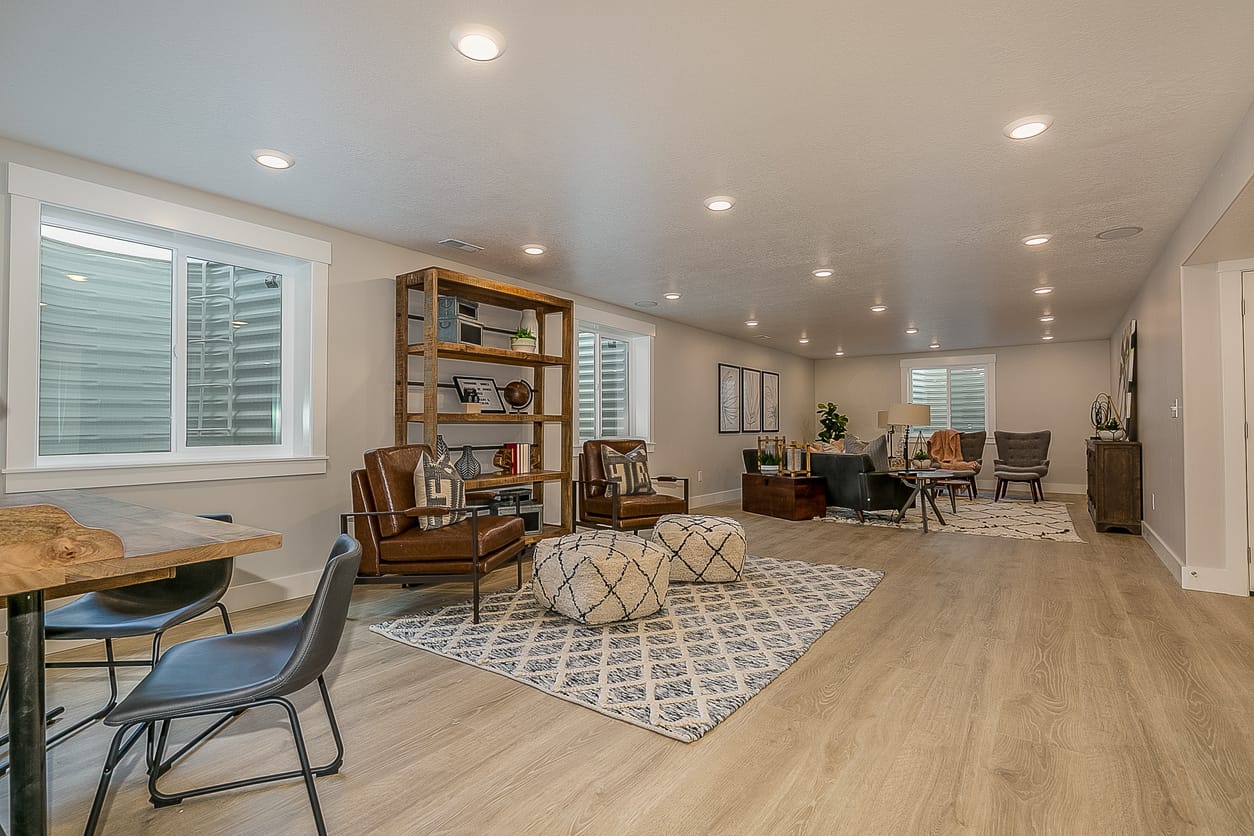
Below-grade spaces in Northern Virginia deal with consistent moisture exposure from the surrounding soil, especially during the region’s humid summers. Waterproof-core LVP is generally the strongest choice for basements, followed by porcelain tile. Solid hardwood and carpet without a proper moisture barrier are the two options most likely to cause problems in a basement over time. If you’re planning a full basement remodel rather than just new flooring, that guide covers the larger scope of work.
Best Flooring for Kitchens and High-Traffic Areas
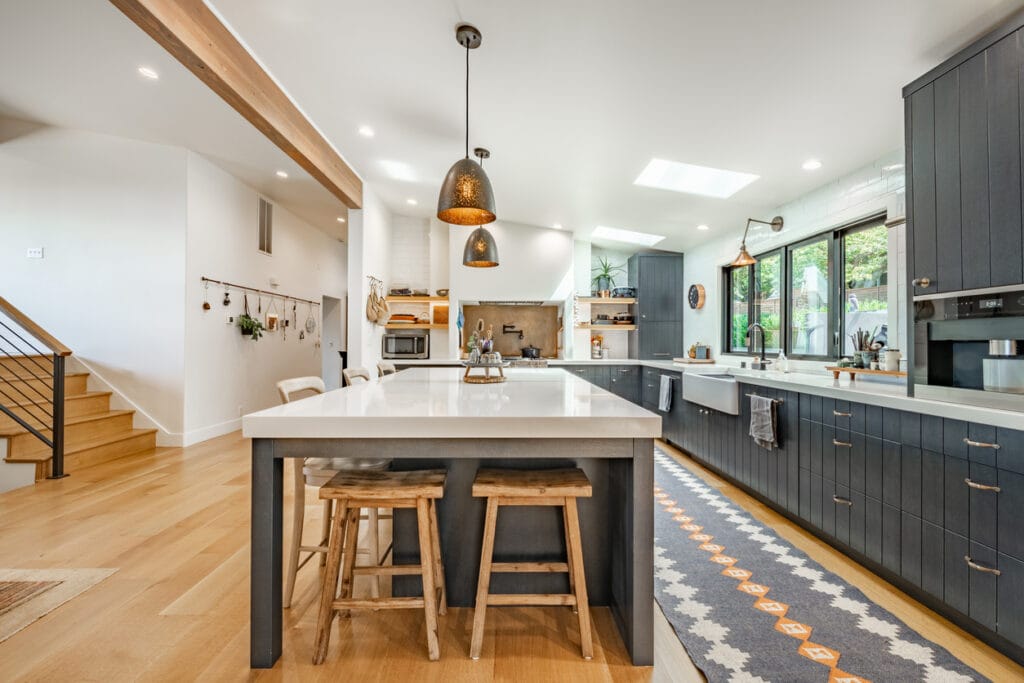
Kitchens need a surface that resists spills, scratches, and daily foot traffic. LVP and porcelain tile both perform well here. Engineered hardwood is a reasonable option too, in kitchens with an open layout to the main living space, as long as you clean up spills promptly. See our kitchen remodel cost guide if flooring is part of a larger kitchen renovation.
Best Flooring for Bathrooms
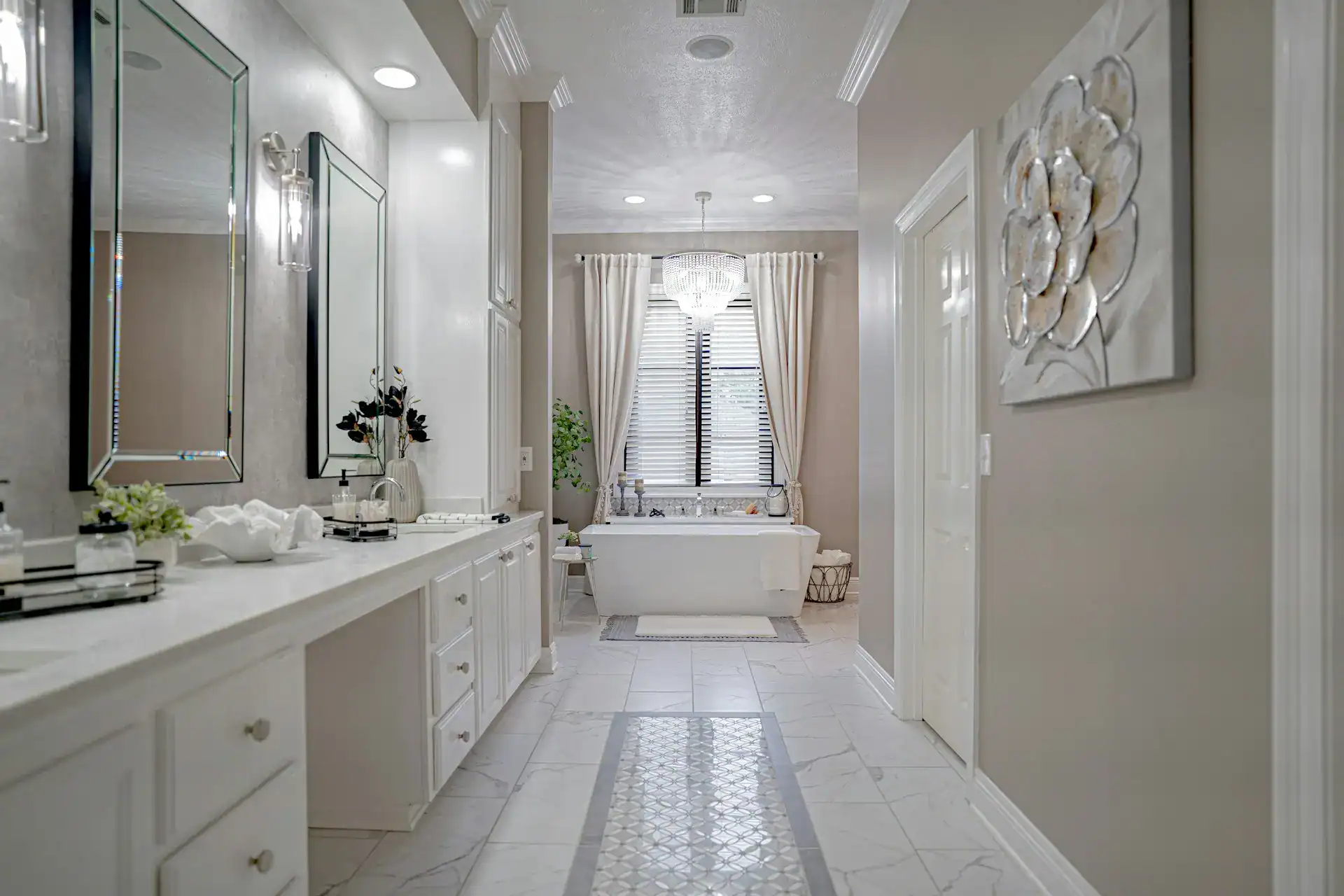
Porcelain tile remains the standard for bathrooms due to its water resistance, with natural stone as a premium upgrade. Waterproof LVP has also become a popular, more budget-friendly alternative for secondary bathrooms. Our bathroom remodel cost guide breaks down full project pricing beyond flooring alone.
Best Flooring for Bedrooms and Living Spaces
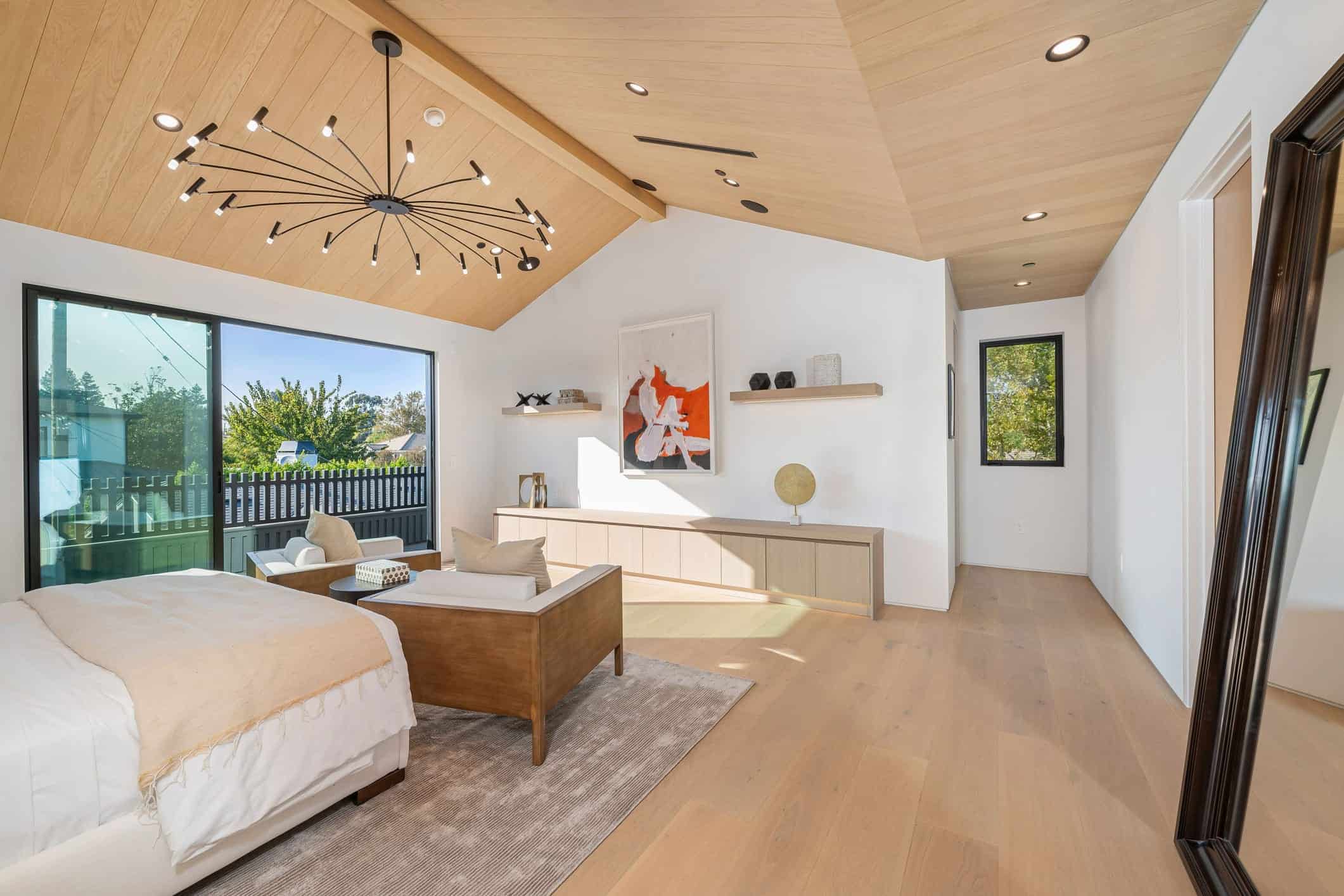
Solid or engineered hardwood, along with carpet, are the most common choices for bedrooms and formal living spaces, largely for comfort and warmth underfoot.
How Northern Virginia’s Climate Affects Flooring Choices
Northern Virginia experiences real humidity swings between summer and winter, and that matters more for flooring than most homeowners expect. Solid hardwood expands and contracts with seasonal humidity changes. That is why proper acclimation before installation, and a small expansion gap along the walls, are both necessary rather than optional. Engineered hardwood handles these swings more predictably because of its layered construction. That is one reason it has become the preferred choice over solid hardwood in below-grade or humidity-sensitive rooms across the region. LVP and tile are largely unaffected by humidity, which is part of why they have become the default recommendation for basements and bathrooms here.
Flooring Material Comparison: Durability, Maintenance, and Lifespan
| Material | Average Lifespan | Water Resistance | Maintenance Level | Refinishable |
|---|---|---|---|---|
| Solid Hardwood | 50+ years | Low | Moderate | Yes, multiple times |
| Engineered Hardwood | 25 to 30 years | Low to moderate | Moderate | Limited, 1 to 2 times |
| LVP | 15 to 25 years | High | Low | No |
| Porcelain/Ceramic Tile | 25 to 50+ years | High | Low | No |
| Natural Stone | 50+ years | Moderate (needs sealing) | High | No |
| Laminate | 10 to 20 years | Low to moderate | Low | No |
| Carpet | 8 to 12 years | Low | Moderate to high | No |
2026 Flooring Design Trends in Northern Virginia
Homeowners in the region are gravitating toward a few clear directions this year. Wide-plank white oak in warm, natural tones has largely replaced the gray-toned hardwood that was popular several years ago. Large-format porcelain tile, often in a matte finish, is showing up more in kitchens and bathrooms, often paired with the same material choices covered in our kitchen countertop material guide. It creates fewer grout lines and reads as more modern. Waterproof-core LVP continues gaining ground even in main living areas, not just basements, because it offers hardwood-like appearance with far less maintenance. Mixed-material transitions, such as tile in a mudroom flowing into hardwood in the main living space, are also increasingly common in whole-home renovations.
Flooring and Home Resale Value in Northern Virginia
Flooring is consistently one of the renovation upgrades buyers notice first, and it shapes their perception of the entire home. Homes with worn carpet or dated flooring tend to sit longer on the market or invite lower offers. Local agents frequently cite updated hardwood or high-quality LVP throughout the main living areas as a factor that speeds up a sale, a pattern also reflected in our 2026 Home Renovation ROI Report. Flooring alone does not carry the highest dollar-for-dollar return of any renovation project. It still has an outsized effect on first impressions, which matters in a competitive Northern Virginia real estate market.
How to Choose a Flooring Contractor in Northern Virginia
A few questions separate a reliable flooring contractor from a risky one. Start by asking whether the company is licensed and insured, and ask to see the license number rather than taking it on faith. Find out how they handle subfloor issues if they discover them mid-project, since this is one of the most common sources of disputes over final cost. It also helps to ask about acclimation time for hardwood and whether the schedule already builds it in. Request a fixed, itemized quote rather than a vague per-square-foot number, so you know exactly what is included and what is not. Stay cautious of any bid that comes in dramatically lower than others, since that often means the contractor cut corners on subfloor prep or material grade.
This is the same approach JBL Construct brings to every flooring project. Founder Jay Nath built the company around one idea, which you can read more about on our story: renovation should not require homeowners to manage fragmented teams or guess at what a quote actually includes. He personally oversees projects from the initial consultation through final walkthrough. That habit traces back to his own frustrating experience renovating a first home in 2021, where poor communication and shifting scope were the norm rather than the exception. Nath brings more than eight years of hands-on construction experience to every project, including several years running fix-and-flip projects before founding JBL Construct. His approach centers on precise subfloor assessment, honest scope-setting before work begins, and craftsmanship that does not get rushed to hit an artificial deadline.
Flooring Cost in Chantilly, VA: Local Considerations
Chantilly sits along the Fairfax and Loudoun County line. Much of its housing stock, split-level and colonial homes dating primarily from the 1970s through the early 2000s, shares a few common characteristics that affect flooring projects. Many of these homes have original subflooring that no one has ever leveled. Others have plywood underlayment that has shifted slightly over several decades, or basements with a history of minor moisture intrusion that needs attention before new flooring goes down. A proper in-home assessment, rather than a phone estimate, is especially important in Chantilly for this reason. Homeowners tackling a whole-home renovation in Chantilly should expect a subfloor evaluation as part of any serious flooring quote. It should never show up as a surprise add-on after they sign the contract.
Conclusion
Choosing flooring for a Northern Virginia home comes down to matching the right material to the room, the home’s age, and the region’s humidity. It is not just about picking whatever looks best in a showroom. A basement needs a different answer than a primary bedroom. A home in Chantilly with an original 1980s subfloor needs a different plan than new construction.
Are you planning a flooring project in Chantilly, Fairfax County, or anywhere else in Northern Virginia? Reach out to JBL Construct for an honest, itemized assessment and a consultation.
Planning a Flooring Project in Northern Virginia?
Get an honest, itemized assessment — from subfloor to finish — with a plan built around your rooms, your home’s age, and this region’s climate.
Schedule a ConsultationVirginia Class A Licensed · DPOR #2705196687
Frequently Asked Questions
How much does flooring cost per square foot in Northern Virginia?
Flooring in Northern Virginia typically costs between $4 and $18 per square foot installed, depending on material. Laminate and carpet sit at the lower end, while solid hardwood and natural stone sit at the higher end.
What is the most durable flooring for a Northern Virginia basement?
Waterproof-core luxury vinyl plank is generally the most reliable option for basements in this region, followed by porcelain tile, because both resist the moisture common in below-grade spaces.
Is hardwood or LVP better for a humid climate like Northern Virginia’s?
Engineered hardwood and LVP both handle humidity swings better than solid hardwood. LVP is completely unaffected by moisture, while engineered hardwood is far more stable than solid hardwood due to its layered construction.
Do I need a permit to install new flooring in Virginia?
Standard flooring replacement typically does not require a permit in Northern Virginia. However, a permit may apply if the project involves structural subfloor repair or changes to the home’s framing. A qualified contractor should confirm this before work begins.
How long does flooring installation take?
A single room typically takes one to three days depending on material and subfloor condition. A whole-home flooring project usually takes one to two weeks, not including acclimation time for hardwood.
Can new flooring be installed over existing flooring?
In some cases, yes. You can often install LVP over existing tile or vinyl if the surface is flat and stable. You generally cannot install hardwood over most existing flooring types without a subfloor evaluation first.
Does new flooring increase home value?
Updated flooring, particularly hardwood or high-quality LVP in main living areas, is one of the renovation choices buyers respond to most immediately. It can meaningfully improve a home’s marketability even when it does not top the list for pure dollar-for-dollar ROI.
What is the average lifespan of each flooring type?
Solid hardwood and porcelain tile can last 50 years or more with proper care. Engineered hardwood typically lasts 25 to 30 years, LVP lasts 15 to 25 years, laminate lasts 10 to 20 years, and carpet typically needs replacement every 8 to 12 years.