
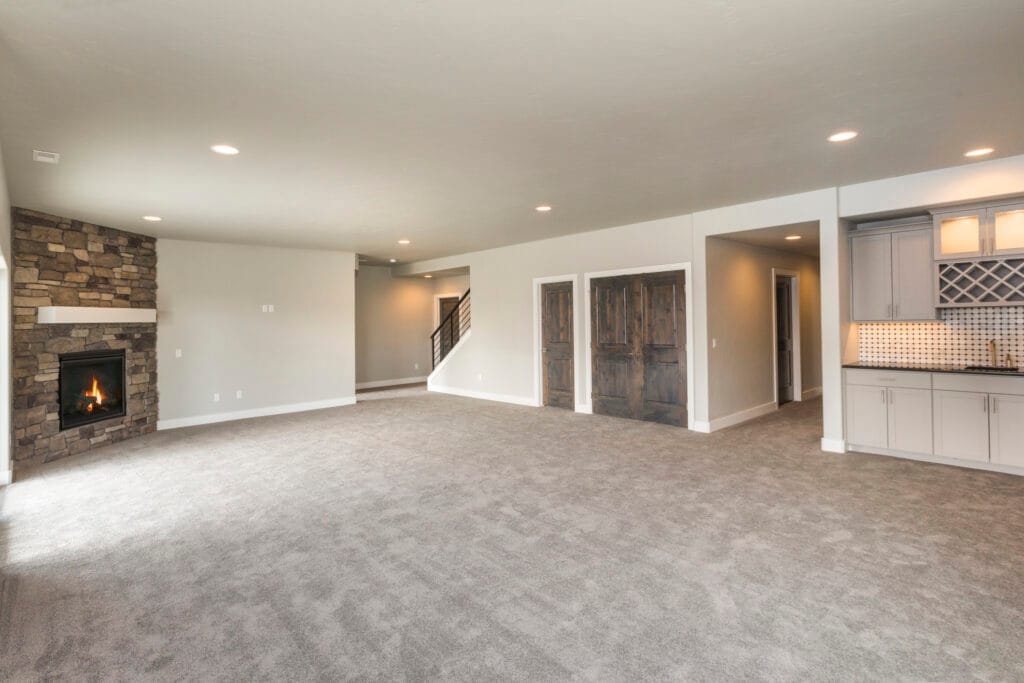
Deciding to finish your lower level is one of the most significant investments you can make in your property. In 2026, a basement remodel in Northern Virginia requires a code compliant construction process to ensure your investment yields maximum ROI. This guide provides a technical and practical roadmap to ensure your project is safe, code-compliant, and built to last.
Technical Basement Remodeling Process (NOVA)
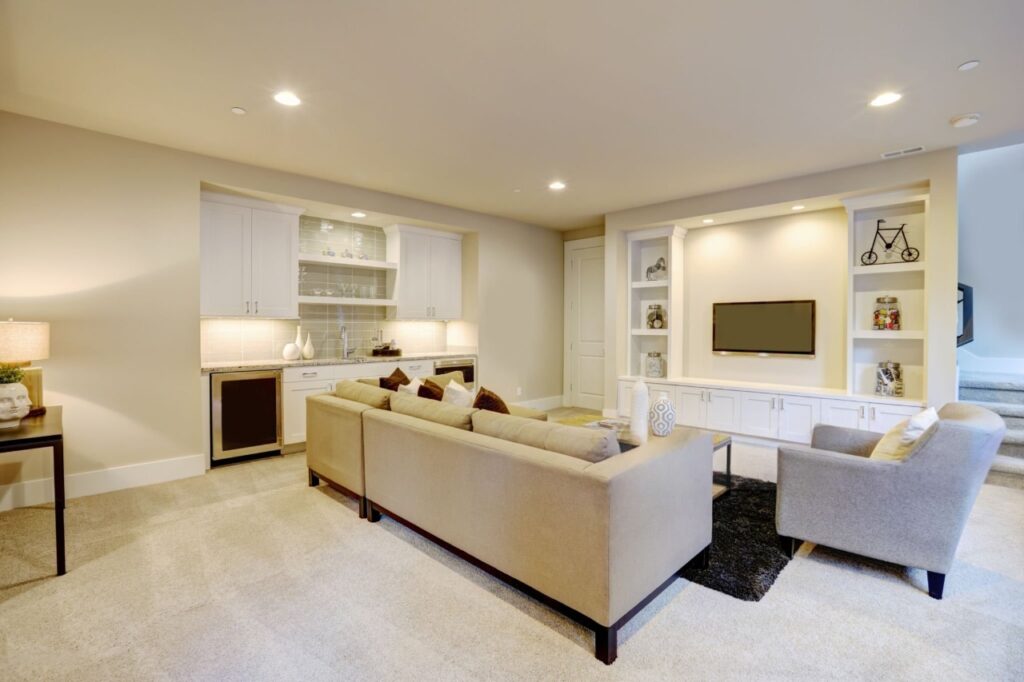
A successful basement remodel follows a logical sequence that prioritizes structural integrity, building code regulations, before aesthetic finishes. Following this remodel roadmap ensures that your investment is protected from the ground up.
- Step 1 – Professional Basement Inspection & Moisture Testing – Before any framing begins, a thorough inspection is vital. In Northern Virginia, soil conditions often lead to hydrostatic pressure. Professional basement finishing contractors conduct calcium chloride tests to measure moisture vapor emission rates. Sealing basement walls at this stage prevents future mold and ensures the longevity of your flooring.
- Step 2 – Layout & Design Planning with NOVA Code Requirements – Your layout must reflect 2026 lifestyle needs while adhering to the Virginia Residential Code. This includes planning for “zones” like home offices and gyms. Effective planning for your basement remodel involves identifying load-bearing walls and plumbing stacks early to avoid costly structural changes later.
- Step 3 – County Permits: Fairfax PLUS / Loudoun LandMARC / Permit Arlington – In 2026, Northern Virginia jurisdictions streamlined their digital portals. Whether you are using Fairfax PLUS, Loudoun LandMARC, or Permit Arlington, securing a Residential Building Permit is non-negotiable. This process protects you by ensuring all work is reviewed by county engineers.
- Step 4 – Structural & Framing Work – Framing is the skeleton of your retreat. We use kiln-dried lumber and pressure-treated bottom plates wherever wood meets concrete. This stage defines the rooms and ensures your walls are perfectly plumb, which is essential for high-end cabinetry and trim work later.
- Step 5 – Electrical, Plumbing & HVAC Mechanical Planning – This “rough-in” phase is where your basement renovations become functional. It includes installing sewage ejector pumps if needed and dedicated 20-amp circuits for high-demand areas like home gyms or server closets. All mechanical work must pass a county inspection before being enclosed. Licensed tradesperson must be hired for MEP rough ins.
- Step 6 – Insulation & Soundproofing for DC-Area Living – Basements in the DC area can feel damp and noisy. We prioritize closed-cell spray foam for thermal protection and mineral wool batts in the ceiling to dampen foot traffic noise from the main floor. This creates a quiet, energy-efficient environment that feels like an integrated part of the home.
- Step 7 – Drywall, Flooring & Interior Finishes – With the infrastructure approved, we move to hanging moisture-resistant drywall. For flooring, 2026 trends favor Luxury Vinyl Plank (LVP) for its waterproof properties. This is when your modern family retreat truly begins to take shape, reflecting your personal style and the basement remodeling services you’ve selected.
- Step 8 – Final Inspection & Certificate of Occupancy (CO) – The final step is the official county walkthrough. An inspector verifies that all egress, electrical, and plumbing elements meet the 2026 code. Once passed, you receive your Certificate of Occupancy, legally recognizing the space as habitable and adding it to your home’s total square footage.
With Northern Virginia labor costs rising 4–6% annually and high demand for skilled trades, the best time to lock in your project is now. Don’t let permit delays stall your vision. Schedule an On-Site Discovery Session to receive a technical roadmap and a guaranteed spot on our 2026 production calendar.
Technical Guide:
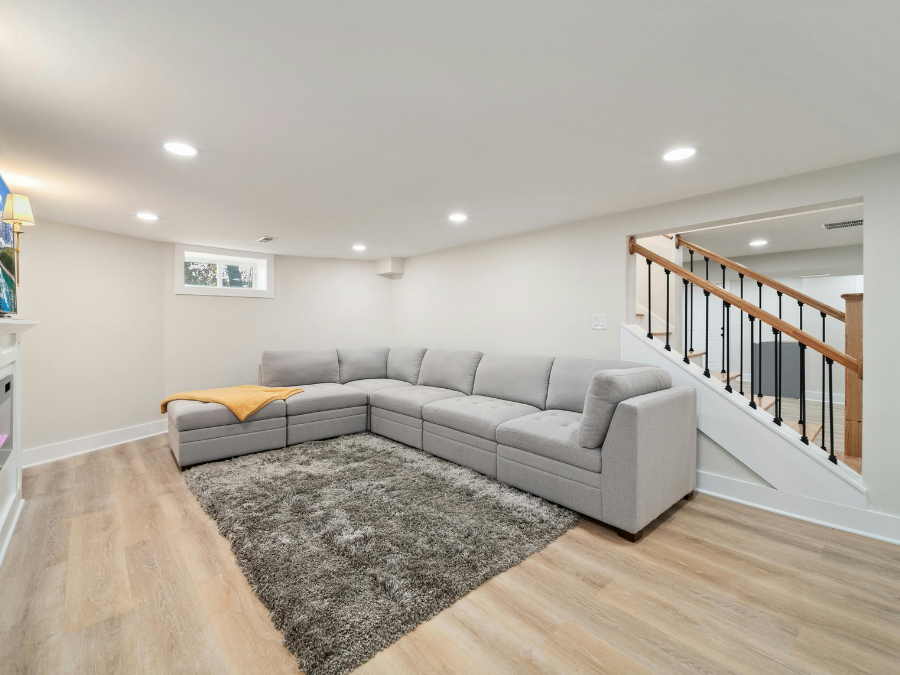
HVAC, Ventilation & Indoor Air Quality (NOVA Basements)
Maintaining a healthy environment is critical in the humid Northern Virginia region. Proper waterproofing and finishing must be paired with advanced air management systems.
Extending Existing HVAC in Fairfax & Loudoun Homes – In many Fairfax and Loudoun homes, the existing HVAC system has enough capacity to handle the lower level. However, simply cutting vents into existing trunk lines often leads to uneven temperatures. We use Manual J calculations to ensure the system is balanced and the air is distributed effectively.
Adding Independent HVAC Zones – For larger basements or those intended as independent living suites, adding a secondary zone or a ductless mini-split system is often the best choice. This allows for precise temperature control in areas like a guest bedroom or a dedicated home theater without affecting the rest of the house.
Dehumidification & Air Filtration Systems – Northern Virginia basements naturally trend toward higher humidity. We recommend whole-house dehumidifiers integrated into your HVAC system. These units maintain humidity levels between 30% and 50%, preventing dust mites and mold growth while improving overall comfort.
Local Code Ventilation Requirements – Virginia building codes require a specific amount of “makeup air” and mechanical ventilation for habitable rooms. This ensures a constant supply of fresh outdoor air, which is vital for concentrated spaces like basement gyms where air can quickly become stale.
Energy Efficiency & Heat Loss Considerations – Concrete walls are significant heat sinks. To meet 2026 energy standards, we focus on continuous insulation barriers that prevent “thermal bridging.” This keeps your basement warm in the winter and cool in the summer, significantly reducing your monthly utility bills.
Insulation & Soundproofing (Northern Virginia Climate)
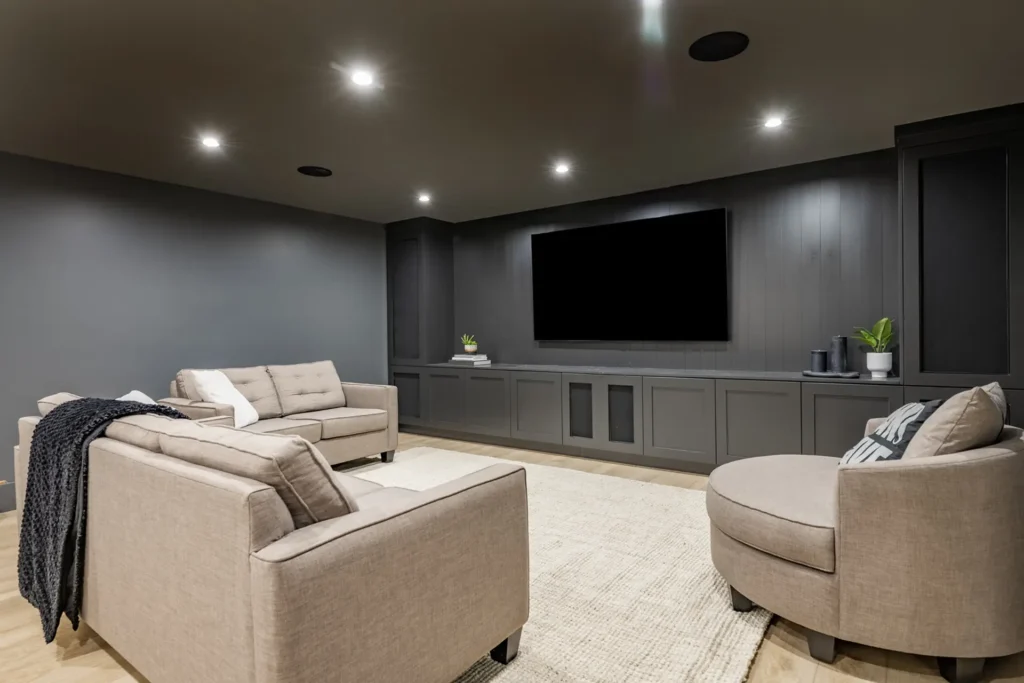
The comfort of your basement remodel depends on how well you manage temperature and sound. Our climate in Virginia Zone 4 requires specific technical solutions.
Best Insulation Types for NOVA Basements – We typically recommend closed-cell spray foam or rigid foam boards for exterior basement walls. Unlike fiberglass batts, these materials do not absorb moisture and provide an excellent air seal, which is critical for basement renovation companies to deliver a high-quality product.
R-Value Requirements for Cold & Humid Climates – Current Virginia codes generally require R-13 to R-15 for basement walls. Achieving this R-value ensures your basement stays at a consistent temperature, reducing the strain on your HVAC system and preventing the “drafty” feeling common in older renovations.
Thermal Break & Air Barrier Planning – A thermal break is a layer of insulation that separates the cold concrete from the warm interior framing. By creating this air barrier, we eliminate the dew point where condensation could occur, effectively sealing basement walls against internal moisture buildup.
Floor & Ceiling Soundproofing Techniques – To make a basement feel like a retreat, you must block overhead noise. We use resilient channels and sound-dampening clips to decouple the basement ceiling from the floor joists above. This drastically reduces the sound of footsteps and furniture movement.
Acoustic Panels, Carpeting & Ceiling Treatments – For home theaters and offices, we incorporate soft surfaces and acoustic panels to manage echoes. Thick carpeting with a high-quality pad can also act as a secondary sound barrier while adding warmth and comfort to your family’s new hangout space.
Egress Windows & Safety in Northern Virginia
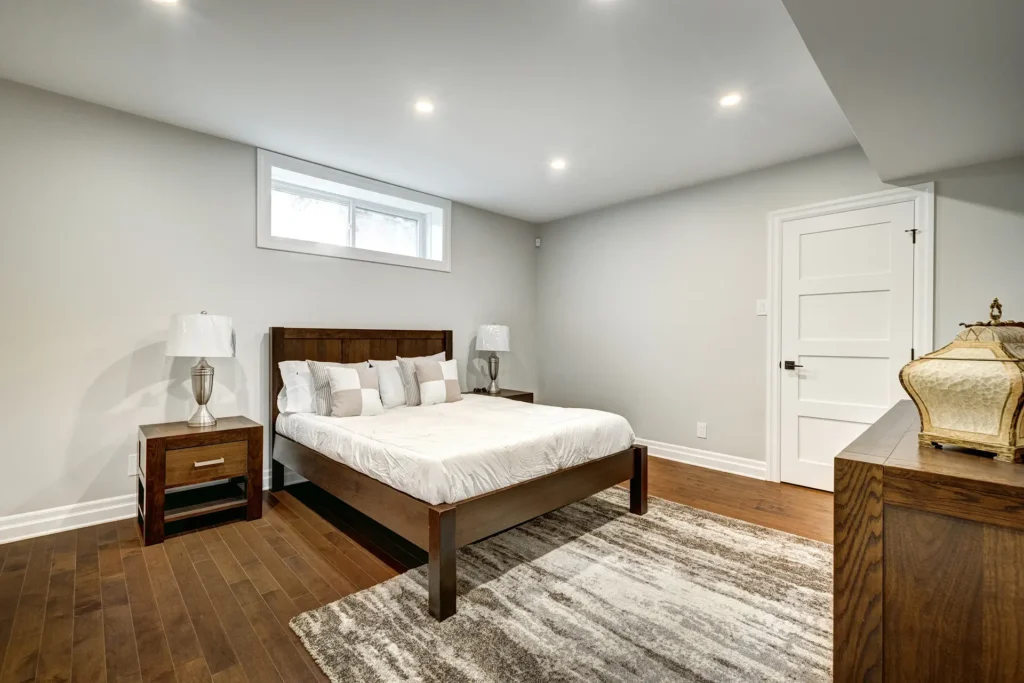
Safety is the most important aspect of any basement remodel. If you are looking for local contractors for basement finishing, ensure they are experts in egress requirements.
What Is an Egress Window (Code & Safety) – An egress window is a large, operable window that serves as an emergency exit. It is a fundamental safety requirement that allows occupants to escape—and firefighters to enter—during an emergency.
Legal Requirements for Basement Bedrooms – In all Northern Virginia counties, you cannot legally market a basement room as a bedroom without a code-compliant egress window. This is a non-negotiable rule that protects both your family’s safety and your home’s future resale value.
Size & Placement Rules in Fairfax & Arlington – Fairfax and Arlington require a minimum net clear opening of 5.7 square feet. The window must be easily operable from the inside without keys or tools, and the sill height cannot exceed 44 inches from the finished floor.
Window Wells & Exterior Stair Access – If the egress window is below ground level, a window well is required. These wells must provide enough room for a person to crawl out and must include a permanent ladder or steps if the well is deeper than 44 inches.
Fire Escape & Emergency Response Safety – Beyond the window itself, we ensure that smoke detectors and carbon monoxide alarms are interconnected throughout the basement. This comprehensive approach to safety is what defines a professional basement remodeling company.
Before you hang a single sheet of drywall, ensure your foundation is prepared for Virginia’s unique “marine clay” and high humidity levels. Partner with a design-build contractor who prioritizes engineering and aesthetics together.
Permits & Building Codes for Basement Remodels
Navigating the legal landscape is part of our integrated process. Understanding these rules prevents delays and ensures a smooth project.
When Permits Are Required (All NOVA Counties)
Permits are required for nearly every aspect of a basement project, including framing, electrical, plumbing, and mechanical work. Even if you are planning for a “simple” finish basement remodeling, a permit is legally required.
Electrical, Plumbing & Mechanical Code Compliance
Code compliance ensures that your electrical panels aren’t overloaded and that your plumbing is vented correctly. These standards prevent fires and sewage backups, which are the most common risks in poorly executed renovations.
Minimum Ceiling Height & Stair Code
Habitable basement rooms generally require a minimum ceiling height of 7 feet. We also pay close attention to stair codes, including tread depth and riser height, to ensure your basement is accessible and safe for all ages.
Inspection Process (Rough, Final, CO)
Inspections occur at critical milestones. The “rough-in” inspection happens before drywall, and the “final” inspection happens after all finishes are complete. Passing these leads to your Certificate of Occupancy.
Consequences of Unpermitted Work
Unpermitted work can lead to county fines, the required removal of finished drywall, and significant issues during the home appraisal process. It is never worth the risk to skip the legal permit process.
Common Basement Remodeling Mistakes to Avoid
When you are searching for finished basement contractors near me in google please ensure that your contractor is licensed and insured which is the first step you should follow. Further, avoiding the following errors & steps will save you thousands in future repairs.
- Not Including a Contingency Fund: Always set aside 10% to 15% of your budget for unforeseen issues, especially in older NOVA homes.
- Ignoring Moisture or Waterproofing Challenges: Never finish a basement that has active leaks. Address drainage and sealing basement walls first.
- Underestimating Local Permit Requirements: Assuming you don’t need a permit is a costly mistake that can halt your project.
- Skipping Proper Insulation: Cheap insulation leads to high energy bills and uncomfortable rooms.
- Poor Lighting Planning: Basements need more light than upper levels. Layer your ambient, task, and accent lighting.
- Not Planning for Storage: Every family needs storage. Use “dead space” under stairs or build custom closets into your layout.
- DIYing Structural Work: Never cut a floor joist or remove a column without an engineer’s approval.