Home › Field Notes › Sunrooms vs. Screened-In Porches
Northern Virginia Home Additions • 2026 Guide • 🕑 10 min read
You love the idea of sitting outside with a morning cup of coffee. Then July hits. Humidity levels soar to 80%. The mosquitoes arrive. The pollen count spikes.
If you are a resident of Fairfax County, Loudoun County, Arlington County, or Clarke County, this scenario is all too familiar. The weather in Northern Virginia is lovely for about four months out of the year. The remaining eight months require some planning if you wish to enjoy outdoor living.
This is exactly why more and more homeowners in Northern Virginia are investing in covered living spaces. A sunroom addition or screened porch gives you the benefits of the outdoors without the discomforts. But these two options are quite different in cost, comfort, and how they connect to your home.
This guide will walk you through both so you can make the right decision for your property, your budget, and how you actually want to live.
Know Your Options: What Are We Actually Comparing?
Before making any decision, it helps to understand what each option actually is — and what it is not. These four additions are often grouped together in homeowner conversations, but they serve very different purposes and come with very different expectations.
Screened-In Porch
An open-air structure attached to your home. It has a roof, a floor, and framed walls covered with screen mesh. Air passes freely through the structure. It has no insulation and no climate control.
It keeps bugs and rain out. It does not keep heat or cold out. In Northern Virginia, a screened-in porch is comfortable until late October or early November. After that, it effectively becomes a storage room.
✓ Best for: Spring & Fall useThree-Season Room
A step above the screened porch. It is constructed with solid walls, windows, and more protection from the elements. However, it is not fully insulated or climate-controlled. It is more comfortable than a screened porch but still not suitable for a Virginia January.
Think of it as a transitional space — better than a screened porch but not a true year-round room.
✓ Best for: 8–9 months of useFour-Season Sunroom Addition
A four-season room is what most people mean when they hear sunroom addition. It is fully insulated, climate-controlled, and designed to be used year-round. It is essentially a genuine room being added to your home.
This is not a renovated porch — it is a full construction. It requires permits, engineering, and proper integration with your existing structure.
✓ Best for: Year-round living & resale valueThe Outdoor Patio
A patio is an open hardscape area, usually made of concrete, pavers, or stone. It is the least expensive option upfront. However, it provides no relief from heat, bugs, or rain. If you are also considering a custom deck builder as an alternative, it is worth knowing that neither a deck nor a patio alone solves the NoVA climate problem.
A patio in Northern Virginia is often underused for a significant portion of the year.
● Best for: Budget-focused outdoor spacesComfort Comparison: How Each Holds Up in Virginia’s Climate
Virginia’s weather poses a real challenge for outdoor living. The summers are hot and humid, and the heat index regularly reaches above 100°F in Fairfax and Loudoun counties. The stink bugs, mosquitoes, and spotted lanternflies are not merely a nuisance — they are the actual reason many homeowners stay indoors from June through September.
Here is how each option performs across the four seasons:
| Addition Type | Spring | Summer | Fall | Winter |
|---|---|---|---|---|
| Screened-In Porch | ✓ Great | ⚠ Hot & Muggy | ✓ Good | ✕ Too Cold |
| Three-Season Room | ✓ Great | ⚠ Warm Without AC | ✓ Great | ⚠ Chilly |
| Four-Season Sunroom | ✓ Great | ✓ Climate-Controlled | ✓ Great | ✓ Fully Livable |
| Open Patio | ✓ Good | ✕ Too Hot / Bugs | ✓ Good | ✕ Too Cold |
If you want a space you can use on a rainy Saturday in February or a steamy August evening, only a four-season sunroom addition gives you that reliability every month of the year.
Month-by-Month Usability in Northern Virginia
| Addition | Jan | Feb | Mar | Apr | May | Jun | Jul | Aug | Sep | Oct | Nov | Dec |
|---|---|---|---|---|---|---|---|---|---|---|---|---|
| Screened-In Porch | ✕ | ✕ | ~ | ✓ | ✓ | ~ | ~ | ~ | ✓ | ✓ | ~ | ✕ |
| Three-Season Room | ✕ | ✕ | ~ | ✓ | ✓ | ✓ | ~ | ~ | ✓ | ✓ | ~ | ✕ |
| Four-Season Sunroom | ✓ | ✓ | ✓ | ✓ | ✓ | ✓ | ✓ | ✓ | ✓ | ✓ | ✓ | ✓ |
| Open Patio | ✕ | ✕ | ~ | ✓ | ✓ | ~ | ✕ | ✕ | ✓ | ✓ | ~ | ✕ |
The Real Cost of Comfort: What to Budget in 2026
It is in the area of cost that homeowners are often most surprised. What appears to be the affordable option upfront can sometimes deliver less value over time. Here is a realistic look at the costs you might incur in the Northern Virginia market in 2026.
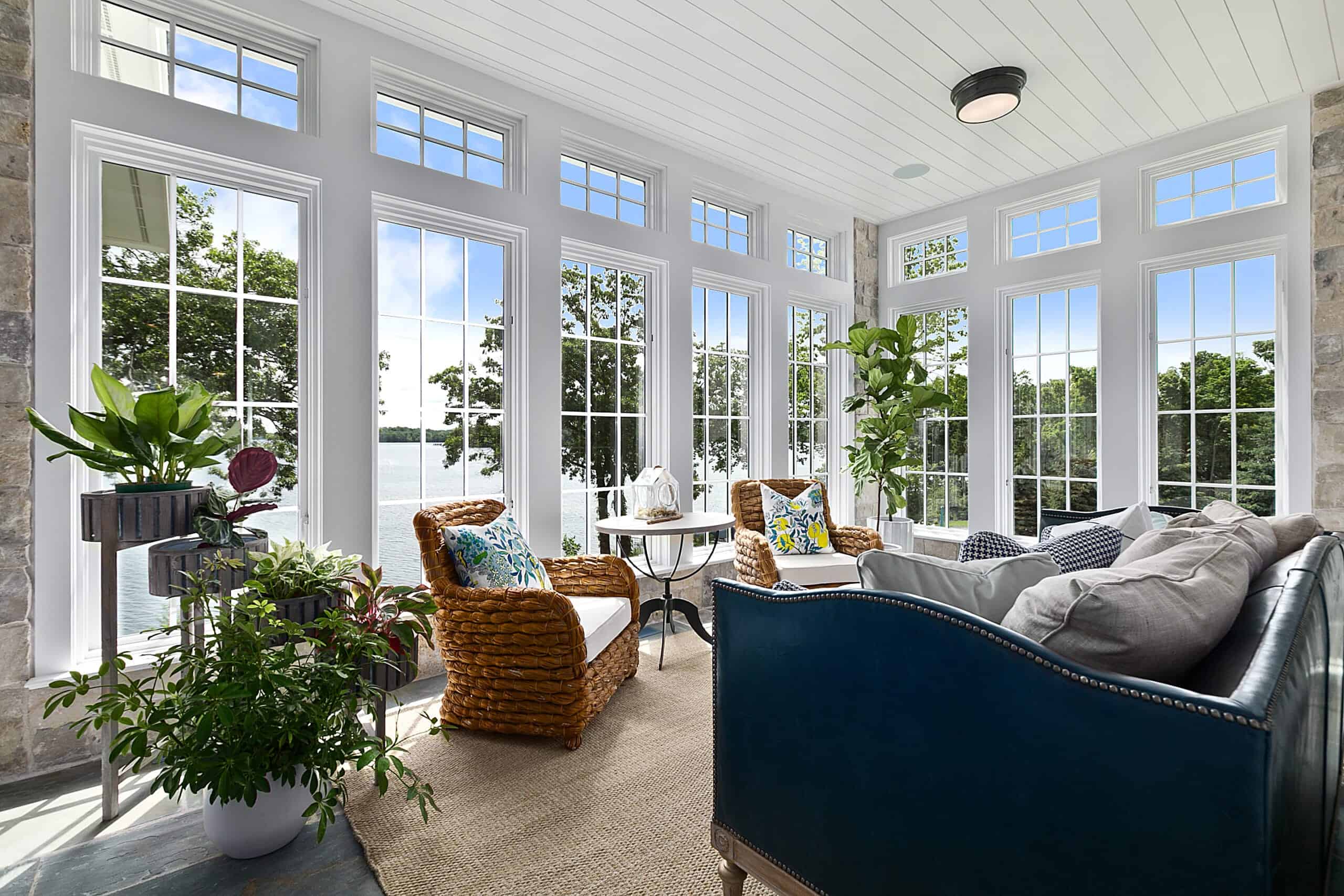
A fully glass four-season sunroom — the kind of investment that pays dividends in comfort and resale value.
Screened-In Porch
A simple screened-in porch in the NoVA area typically runs between $18,000 and $40,000, depending on size and whether you are building from scratch or retrofitting an existing deck. Projects in Clarke County tend to run slightly lower than those in Fairfax or Arlington, where labor costs are higher.
Cost Range: $18K – $40KThree-Season Room
A three-season room generally falls in the $35,000 to $65,000 range. The jump in cost reflects the additional framing, windows, and finishing work. These have become increasingly popular in Loudoun County, where newer homes often have more flexible rear yard spaces.
Cost Range: $35K – $65KFour-Season Sunroom Addition
A four-season room in the NoVA area can run anywhere from $55,000 to over $130,000 or more, depending on size, foundation type, quality of windows, and HVAC integration. This is a full addition, not a kit system, and it requires permits and coordination with your existing structure.
Cost Range: $55K – $130K+Outdoor Patio
A patio is the most affordable option at $8,000 to $25,000 for a quality installation. But it offers no weather protection. What looks like savings upfront often means the space sits unused for months at a time.
Cost Range: $8K – $25K2026 Cost Range Comparison — Northern Virginia Market
Scale: $0 — $140K+. Bars show typical project ranges in Northern Virginia (2026). Costs vary by county, scope, and finishes.
Return on Investment
According to remodeling data tracked in the Washington Metro area, a well-built sunroom addition can recoup 50–65% of its cost at resale. Screened-in porches tend to recoup 40–55%. In competitive Fairfax County and Arlington markets, outdoor living space is a genuine buyer draw. In Clarke County’s more rural market, practicality often wins over luxury finishes.
Heating and Cooling Your Addition: Making It Work All Year
This is the section most homeowners skip — and it is the one that matters most for a four-season room. Getting the climate control right is the difference between a room you love and a room you avoid in January or August.
Can You Extend Your Existing HVAC System?
Sometimes. But this depends on whether your current system has the capacity to support additional square footage. Many homes in Fairfax County and Arlington were built with systems sized tightly for the original footprint. Adding load without a corresponding increase in system capacity leads to inefficiency and inconsistent temperatures throughout the home.
A licensed HVAC professional should assess your current system before you make any assumptions about extending it.
Mini-Split Systems: The Most Popular Solution
For most sunroom additions in Northern Virginia, the recommended approach is a ductless mini-split system. A single-zone mini-split heats and cools the new space without connecting to your existing HVAC. It is efficient, reliable, and gives you independent temperature control.
Expect to budget $3,500 to $8,000 for a quality mini-split installation in the NoVA market. Mitsubishi and Daikin are the most commonly used brands among local contractors.
Important for Clarke County and western Loudoun homeowners: Since Virginia’s climate has extreme winters and summers, it is essential that your mini-split system is rated to heat effectively down to at least 5°F. Temperatures in the western Loudoun foothills and Clarke County actually reach those levels. Confirm cold-climate ratings before you purchase.
Insulation and Windows
A four-season room needs proper insulation in the walls, roof, and floor. Low-E double or triple-pane glass is standard for the glazing. In Arlington and Fairfax, where homes sit close together, solar heat gain in summer is a common complaint in poorly insulated rooms. Specify a low solar heat gain coefficient (SHGC) for your glazing if your addition faces south or west.
Glazing tip for NoVA homes: If your addition faces south or southwest — common in Loudoun County subdivisions and Burke-area neighborhoods in Fairfax — ask your contractor to specify glass with an SHGC below 0.30. This significantly reduces summer heat buildup without sacrificing natural light.
What Happens to a Screened Porch in Winter?
It becomes unused or repurposed. Some homeowners add clear vinyl panels to screened porches to extend the season slightly. This is a low-cost option — typically $500 to $1,500 — but it is not insulation. It reduces wind and adds a few degrees of warmth.
Realistic expectation: If you are in Loudoun County and want to use a screened porch on a 30°F evening, vinyl panels alone will not get you there. They extend the usable season by a few weeks, not by several months. For true winter comfort, the four-season sunroom is the only reliable solution.
Blending the Addition With Your Home and Landscape
An addition that looks like it was bolted onto the house is a red flag for buyers — and frankly, it is just unpleasant to look at every day. The best additions feel like they were always part of the home. That outcome takes intentional design decisions from the very start.
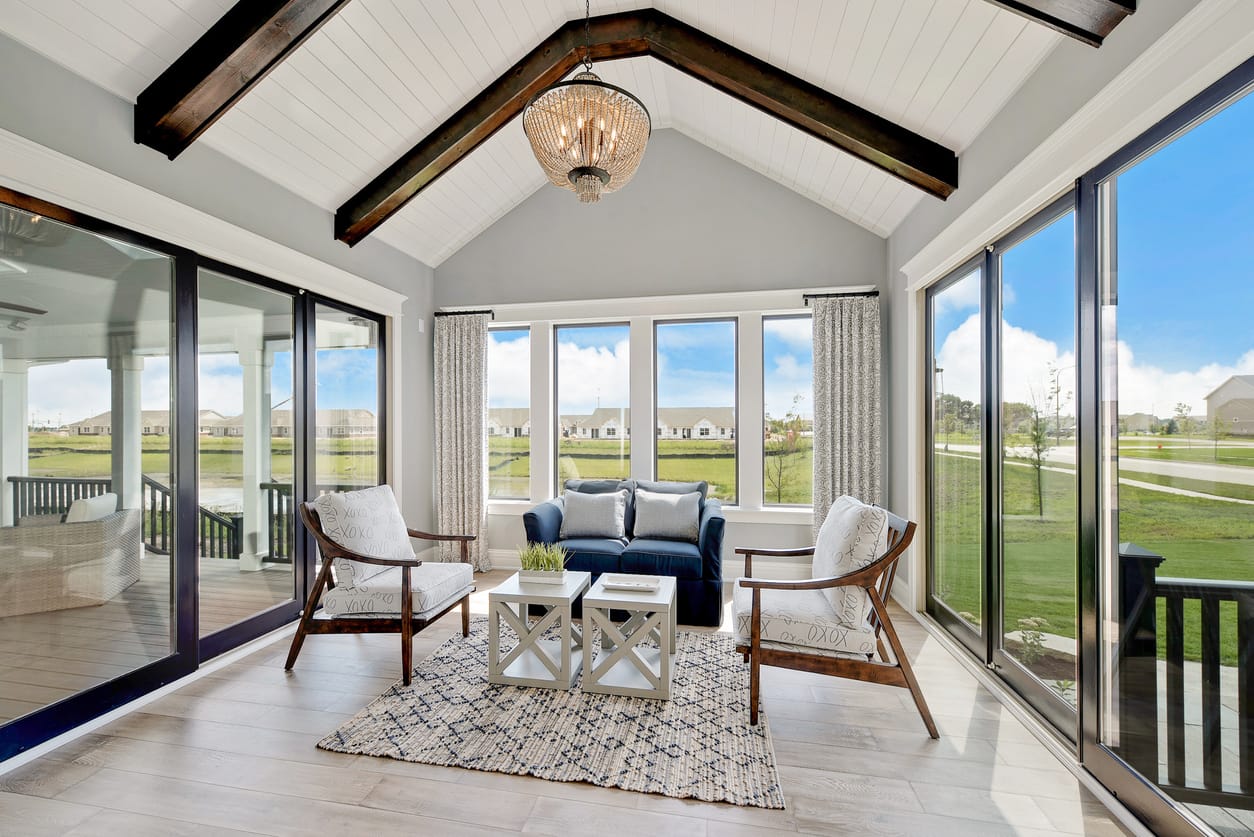
A well-integrated sunroom addition matches the roofline, trim, and materials of the existing home — making it look like it was always there.
Match the Architecture
Your addition should reflect the style of your existing home. Colonial homes in Burke and Herndon neighborhoods look best with rooflines and trim details that echo the original structure. Modern farmhouse additions popular in Loudoun County often use black-framed windows and board-and-batten siding. A contractor who does not ask about your home’s exterior style before designing the addition is one to reconsider. If you are planning broader upgrades alongside the addition, a home renovation and remodeling approach ensures everything integrates cohesively from the start.
Work With the Landscape
Northern Virginia properties often have significant grade changes, mature trees, and established plantings. Before you finalize the footprint of your addition, think carefully about how it connects to the yard.
- Does the addition create a natural flow to a patio or lawn area?
- Will it block light from an interior room or an established garden?
- Can you add a door that leads directly to outdoor entertaining space?
- Does the addition position you to take advantage of the best views on your lot?
In Loudoun County’s pastoral neighborhoods and Clarke County’s larger lots, the transition from interior to exterior is a major part of the design conversation — not an afterthought.
HOA and Permit Requirements
Almost all jurisdictions in Northern Virginia have a permitting requirement for an addition project. Fairfax County requires building permits, electrical permits, and possibly mechanical permits depending on the project scope. Arlington County has a more involved process because of lot coverage restrictions in some of its more densely built neighborhoods.
HOA homeowners in Fairfax and Loudoun: If you live in an HOA community — which covers a large share of Fairfax and Loudoun County neighborhoods — you will also need Architectural Review Board (ARB) approval before construction begins. This process can take four to eight weeks, sometimes longer. Plan for it in your project timeline before committing to a start date with your contractor.
Practical Considerations Before You Build
Before you fall in love with a floor plan, there are three practical realities every Northern Virginia homeowner should understand. Skipping these steps is where projects get expensive and frustrating.
Zoning Setbacks
Each county has its own guidelines on how close a structure can be to property lines. In Fairfax County, rear setbacks for attached structures are typically 25 feet in residential zones, though this varies. Always verify with your county zoning office before you commit to a footprint size or sign a contract.
Foundation Choices
A screened-in porch can often be built on an existing deck frame. A four-season sunroom requires a proper foundation — either a concrete slab or continuous footings — to prevent settling and maintain thermal performance. In Clarke County and parts of western Loudoun, ledge rock or uneven terrain can complicate foundation work and add to project cost.
Timeline Expectations
Allow four to six months from design start to completion for a sunroom addition in Northern Virginia. Permitting alone can take six to ten weeks in Fairfax County. A screened-in porch may move faster — often eight to twelve weeks — but is still subject to permit timelines. Build in buffer time for contractor scheduling, which is competitive in the NoVA market.
Which Addition Is Right for You?
The right addition comes down to three things: how you actually plan to use the space, what your budget allows, and how long you intend to stay in your home. Use the framework below to guide your thinking.
Choose a Screened-In Porch If…
- Your priority is outdoor feel with insect and rain protection
- Your budget is under $40,000
- You realistically will not use the space between November and March
- You want a faster build with a simpler permit process
- You are in Clarke County or rural Loudoun with a casual outdoor lifestyle
- You plan to sell in the near term and want a budget-friendly outdoor upgrade
Choose a Four-Season Sunroom If…
- You want a true extra living room you can use every month of the year
- You work from home and need a dedicated, comfortable workspace
- You plan to stay in your home for five or more years
- You are in Fairfax County or Arlington, where livable square footage affects resale value
- Your budget allows for $55,000 or more
- You want the addition to feel like part of the house, not an accessory to it
A note on the screened porch trade-off: Most homeowners who choose a screened-in porch are satisfied with it. Until they notice it sits empty for four or five months a year. That is not a wrong choice — it is a trade-off worth understanding clearly before you build. If you are genuinely on the fence, the four-season room almost always wins on long-term satisfaction.
Final Thoughts: Invest in How You Actually Want to Live
The right addition is not necessarily the most expensive one. It is the addition that works for your budget, your house, and your lifestyle. If you live in Northern Virginia and you find yourself avoiding your backyard from June to September, a screened-in porch may be a good start — but a four-season sunroom addition will give you the complete solution. Not only do you get the light and the connection to the outdoors, but you get a room you can use all four seasons of the year.
Take your time and get the details right. The foundation, the HVAC, the county permits, and how the addition relates to your existing house and yard are all important considerations. You can see examples of what is possible in our inspirational gallery of completed projects across Northern Virginia.
Ready to Find Out What Is Possible on Your Property?
Your next step is a site consultation with a qualified addition contractor who knows Fairfax County, Loudoun County, Arlington, and Clarke County regulations. The right guidance early saves real money and real headaches later.
Book Your Free Consultation → No hard sales pressure — only expert guidanceKeep reading
- Ready to plan a sunroom? See our sunroom additions service overview for Northern Virginia.
- Thinking about converting a porch? See how much a sunroom addition costs — including the cost to enclose a porch.
- Want the technical detail? Read how a sunroom is built to code in Northern Virginia.
- Looking for inspiration? Browse our luxury sunroom ideas.
Frequently Asked Questions
Answers to the most common questions from Northern Virginia homeowners planning a sunroom or screened-in porch addition.
Do I need a permit to add a screened-in porch in Fairfax County?
What is the difference between a three-season room and a four-season room?
Can a sunroom addition be used as a home office?
How long does it take to build a sunroom addition in Northern Virginia?
Will a sunroom addition increase my home’s value in Northern Virginia?
Is a screened-in porch worth it if I only use it in warm months?
Still have questions? Our team serves homeowners across Fairfax, Loudoun, Arlington, and Clarke counties.
Schedule a Free Consultation Call →Fairfax County • Loudoun County • Arlington County • Clarke County