
Deck Prices in Arlington, VA: A Complete 2026 Cost Guide
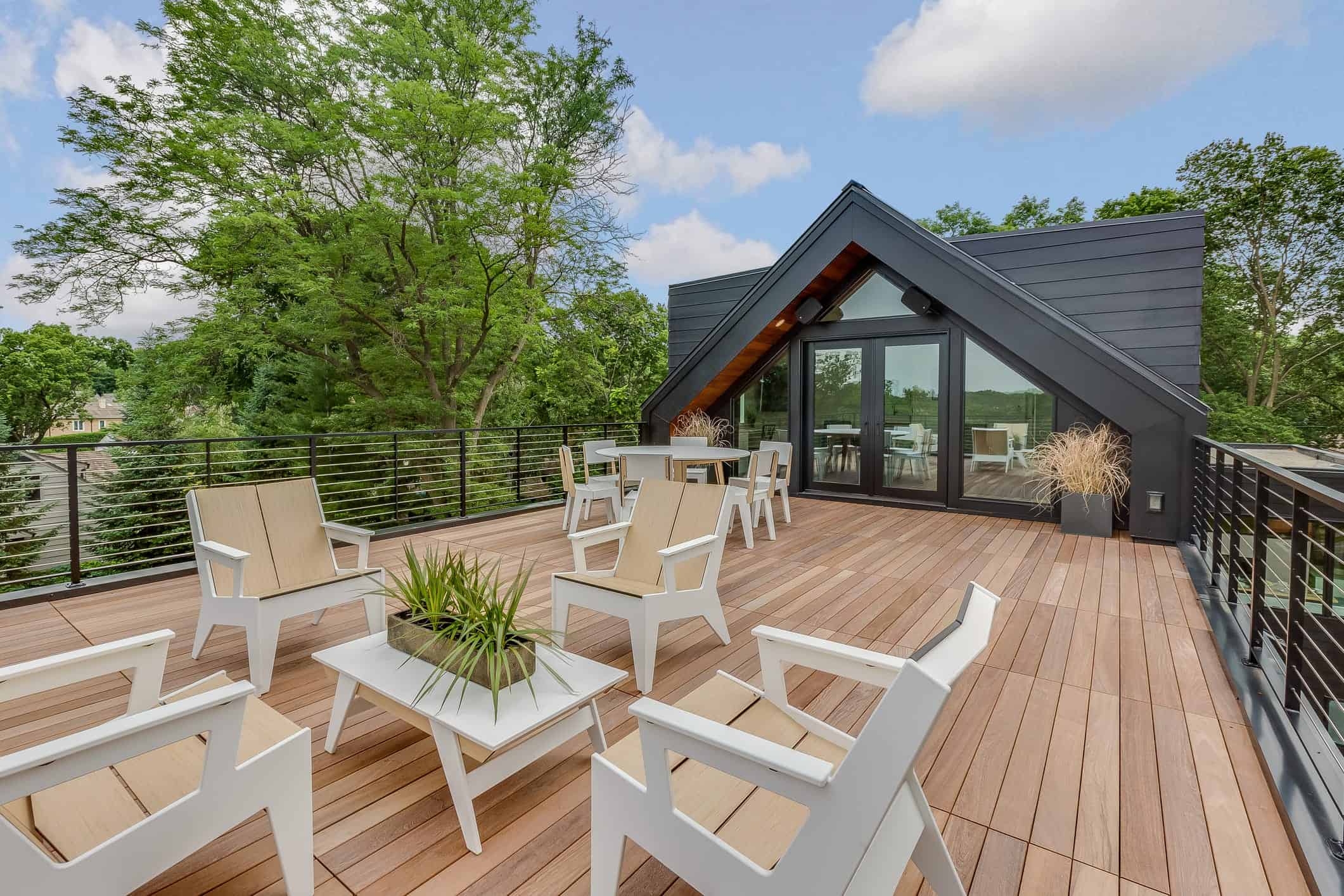
A glimpse of the possibilities — deck design inspiration.
Have you started pricing out a deck in Arlington? The numbers may feel higher than a national deck cost calculator led you to expect. You’re not imagining it. Deck prices in Arlington, VA run above the regional Northern Virginia average. The reasons are specific to this county. Small urban lots limit buildable space. Permitting runs through Arlington’s own county government instead of a separate town office. In some neighborhoods, a design review process kicks in that doesn’t exist anywhere else in Northern Virginia.
This guide breaks down what a deck actually costs in Arlington by material and size. It also covers what pushes those numbers up or down on a specific lot. That includes the Arlington-specific factors, permits, historic districts, and environmental review, that a generic regional cost guide simply won’t tell you about.
At a Glance: What a Deck Costs in Arlington, VA
That’s the same material-driven range as the rest of Northern Virginia. Arlington projects, though, tend to land toward the higher end of that range more often than surrounding counties. Smaller, tighter lots complicate equipment access and site work. Regional labor costs run higher, tied to Arlington’s dense, high-demand real estate market. Some neighborhoods add a design review step before permitting can even begin.
Deck Prices in Arlington by Material
Material is still the single biggest driver of total cost, in Arlington just as everywhere else in the region. These per-square-foot figures match Northern Virginia’s regional pricing. Material costs don’t shift much by county. Labor and site conditions are what actually change from place to place.
The most common choice on tighter Arlington lots, since it needs no refinishing and holds up well with less maintenance access around the structure.
Best stain and scratch resistance, a common upgrade on decks that see heavy grill, furniture, or foot traffic in compact outdoor spaces.
Composite Versus Wood: Which Makes More Sense on a Small Arlington Lot
On a larger suburban lot, the maintenance gap between wood and composite matters less. There’s simply more room to work around the deck. On a compact Arlington lot, though, the deck may sit close to a fence, a neighbor’s property line, or the house itself. Composite and PVC decking’s low-maintenance profile tends to be worth the higher upfront cost in that setting. Our composite versus wood decking guide breaks down the full comparison. Our Trex installation guide covers what to look for in a composite-specific installer.
Deck Prices in Arlington by Size
Size and material combine to set the total project cost. These figures match Northern Virginia’s regional sizing tiers exactly. That makes them easy to compare, whether you’re weighing an Arlington quote against a regional estimate or a neighbor’s project in a different county.
Small deck, around 200 sq ft
$11,000 – $24,000
Mid-size deck, around 350 sq ft
$19,000 – $42,000
Large or multi-level, 500 sq ft +
$28,000 – $60,000+
Covered or screened structure
$40,000 – $80,000+
On a typical Arlington lot, the “large or multi-level” tier shows up more often than you’d expect for a smaller-looking yard. Multi-level designs are frequently how a deck works around a sloped urban lot or a raised entry, rather than a simple flat footprint.
What Actually Drives Deck Prices Up or Down in Arlington
Beyond material and size, several factors move the price of a specific project. Each one can push a quote meaningfully higher or lower.
Lot Access and Site Conditions
Arlington’s older, denser neighborhoods often mean narrower side yards, shared driveways, or limited equipment access. Compare that to a newer suburban subdivision, and the difference is real. A crew may need to hand-carry material further, work around a smaller staging area, or navigate a sloped or oddly shaped lot. All of that shows up in labor cost, even before material enters the picture.
Height and Elevation
An elevated deck costs meaningfully more than a low, ground-level deck. That’s common on Arlington homes with a walkout basement or a raised main level. Additional framing, footings, and often a staircase add both material and labor a single-story ground-level deck simply doesn’t need.
Railing, Lighting, and Built-Ins
Cable railing, glass panels, integrated lighting, and built-in seating or planters all add cost beyond the base structure. On compact Arlington lots, built-in seating and planters are a common way to get more function out of a smaller footprint. Budget for these upfront rather than adding them as an afterthought.
Tearing Out an Existing Deck
If you’re replacing rather than building new, demolition and disposal of the old structure adds to the project cost. Older decks in Arlington’s established neighborhoods sometimes reveal rot, undersized framing by today’s code, or improper flashing once removed. Any of those can shift a straightforward replacement into a more involved rebuild.
Labor Versus Material Cost
On most Arlington deck projects, labor makes up a larger share of the total cost than material, often more than half. That’s a big part of why two decks built with identical materials can still land at noticeably different total prices. Skilled labor availability and site complexity drive a meaningful part of what you’ll actually pay, not just the boards themselves.
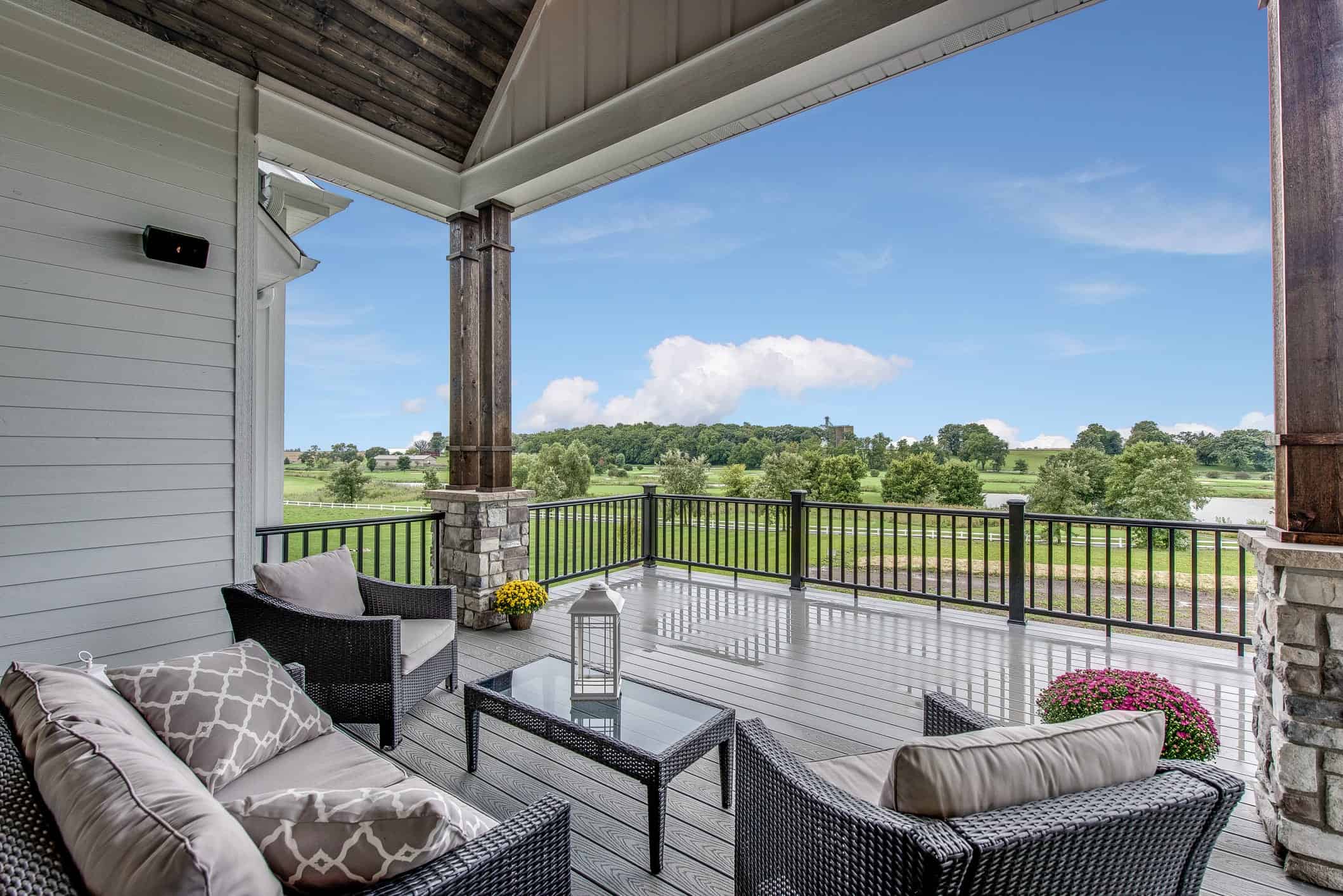
A glimpse of the possibilities — deck design inspiration.
Arlington County Permits and What They Add to Your Project
Arlington is a single, unified county government. It has no separate incorporated towns inside it, unlike Fairfax County, which has Vienna and Herndon as their own permitting authorities. Every deck permit in Arlington goes through Arlington County directly. You file it through the Permit Arlington portal, and the county’s Department of Community Planning, Housing and Development reviews it. Most attached decks need a permit, as does any freestanding deck above roughly 30 inches off grade.
Arlington doesn’t publish a single flat fee for deck permits. The fee depends on project valuation and scope, and the county calculates the exact amount after you submit your application. Treat any number you hear before that point as an estimate, not a quote. Complete, engineer-reviewed plans submitted on the first attempt move through county review faster than incomplete ones that come back with correction requests. That review time is itself a real cost, especially when a delayed project pushes into a more expensive or less available season.
Historic Districts: A Cost Factor Unique to Arlington
This is one of the more overlooked cost factors specific to Arlington. Several established Arlington neighborhoods, including Maywood, Ashton Heights, and Colonial Village, carry local historic district status. Exterior work in these districts, additions, new structures, and in some cases visible deck construction, can require a Certificate of Appropriateness. Arlington’s Historical Affairs and Landmark Review Board handles that review, on top of your standard county building permit.
That extra review adds time. In some cases, it also brings design constraints around materials or street visibility that a non-historic-district project wouldn’t face. If your property sits in one of these neighborhoods, confirm with Arlington County whether your specific deck design would trigger that review. Do this before you finalize plans. A design that clears the county building permit but not this additional review still can’t be built as drawn.
Resource Protection Areas: Relevant for Lots Near Water or Steep Slopes
Arlington enforces a Chesapeake Bay Preservation Ordinance. It establishes Resource Protection Areas around streams, wetlands, and steep slopes of 25 percent grade or more. If your property touches or sits near one of these areas, adding or expanding a deck typically triggers review from the county’s environmental services staff. Projects that increase hard surface coverage, or move construction closer to a protected waterway, may need a water quality impact assessment. Some need mitigation steps too, like native plantings.
This mostly affects properties near Arlington’s streams and wooded ravines, not every lot in the county. Still, check your specific address against Arlington’s Resource Protection Area maps early in planning. Discovering this requirement mid-project causes real delays.
Deck Prices Across Arlington’s Neighborhoods
Arlington isn’t uniform, and where your lot sits affects both the design and the price. In denser, close-in neighborhoods like Clarendon, Ballston, Crystal City, and Pentagon City, smaller lot footprints and tighter site access push projects toward compact, multi-functional designs. Built-in seating or planters often help make the most of that limited square footage. Neighborhoods like Fairlington, Westover, Cherrydale, Bluemont, Shirlington, and Alcova Heights tend to have larger, more established lots. Those lots more often support bigger, multi-level designs or elevated decks off a walkout level. Neither pattern changes the base per-square-foot material pricing. It does, however, affect which size and design tier a typical project in that neighborhood tends to land in.
Deck Addition Return on Investment
A deck is one of the stronger investments among common home improvement projects when it comes to resale value. Annual industry cost-versus-value reporting consistently shows wood deck additions recovering somewhere in the range of 70 to 80 percent of their cost at resale. That’s among the higher returns of any common remodeling project. Composite decks typically land in a broadly similar range, thanks to their lower long-term maintenance appeal to buyers.
In a market like Arlington, outdoor living space is often at a premium on smaller urban lots. Buyers tend to read a well-built deck as real, usable living area. It’s not just a cosmetic addition.
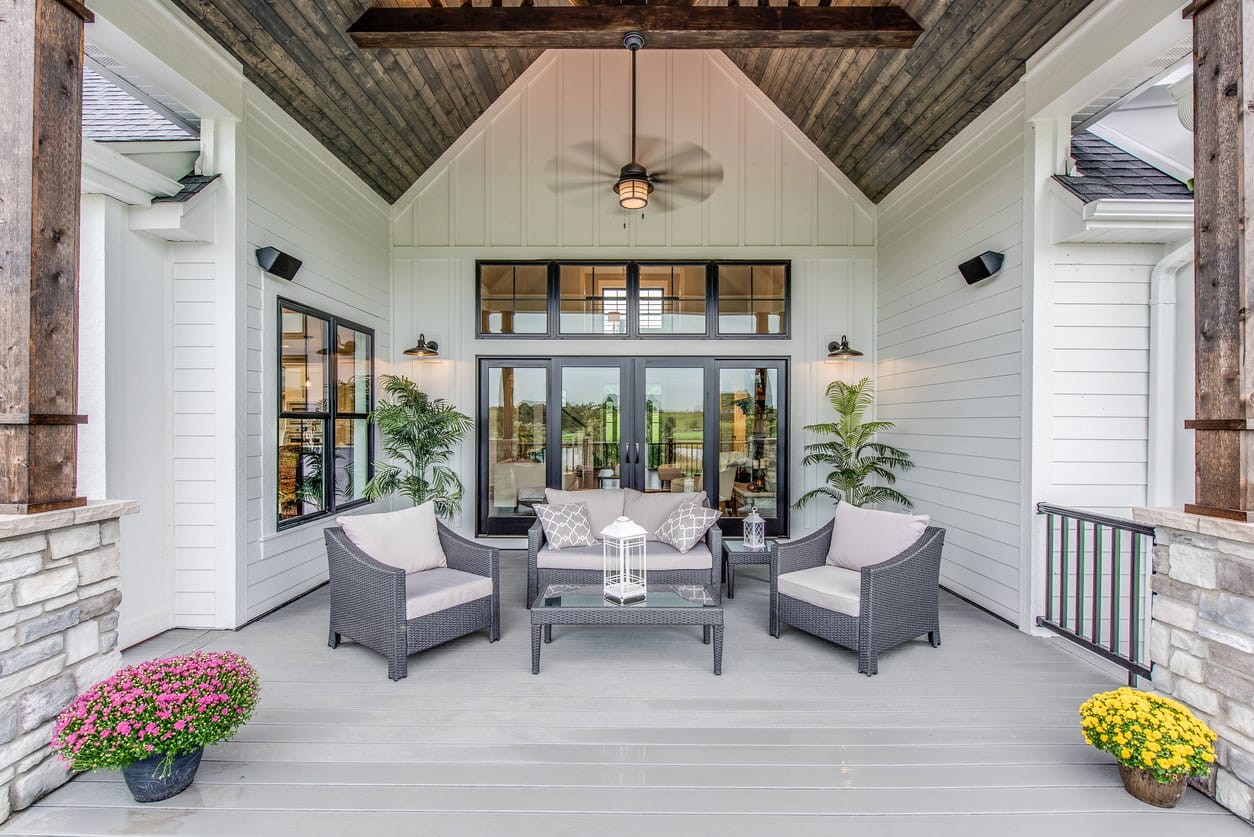
A glimpse of the possibilities — deck design inspiration.
Timing Your Deck Project for the Best Price and Availability
Deck pricing itself doesn’t swing dramatically by season, but contractor availability does. That affects both your timeline and, in some cases, your price. Late winter and early spring tend to be a lower-demand window, with more contractor availability and more scheduling flexibility. By late spring through summer, demand rises sharply as homeowners push to get their deck finished for the warm months. That higher demand can mean longer lead times and less room to negotiate scope or schedule. Planning and permitting typically take several weeks regardless of season. Starting that process in winter sets up a spring or early summer build. It also helps you avoid the peak-season crunch entirely.
Why Choose JBL Construct for Your Arlington Deck Project
JBL Construct is a design-build contractor serving Arlington and the rest of Northern Virginia, led by Jay Nath. He holds an active Class A contractor license through the Virginia Department of Professional and Occupational Regulation, DPOR #2705196687. Jay brings 10+ years of hands-on residential construction experience, and he personally leads every deck project from the first site visit through the final walkthrough. He doesn’t hand projects off to a rotating crew.
That kind of direct, experienced involvement matters most on Arlington’s tighter, more constrained lots. Small decisions, footing placement, ledger attachment, how a design fits an unusually shaped yard, determine how well the finished deck actually performs. They also determine how closely it matches what was promised at the design stage. Jay’s craftsmanship and attention to detail come from years of navigating Arlington’s specific permitting, historic district, and site-access challenges directly. It’s not a generic regional playbook applied the same way everywhere. Every JBL deck project carries a written warranty, and JBL’s work carries 5-star Google reviews you can read directly on our homepage before you hire.
Getting an Accurate Deck Price Quote in Arlington
A phone estimate based on square footage alone will always be rough. An accurate quote requires seeing your specific lot. Access, grade, and any historic district or Resource Protection Area review all change the real cost. Before you compare quotes, make sure each one answers the same questions:
- Does the quote reflect a site visit, or is it a phone estimate based on square footage alone?
- Does the contractor’s timeline already account for Arlington’s permit process and any historic district or Resource Protection Area review your property might need?
- What decking material and brand does the quote actually specify, not just “composite” as a category?
- Does the number include demolition and disposal of an existing deck, if that applies to your project?
- Does the contract tie the payment schedule to project milestones in writing, rather than leaving it to a verbal understanding?
- What workmanship warranty does the contractor offer, separate from the manufacturer’s material warranty?
Frequently Asked Questions
How much does a deck cost in Arlington, VA?
Most Arlington deck projects run $55 to $120 per square foot installed. A mid-size deck around 350 square feet typically lands between $19,000 and $42,000. Arlington projects tend to land toward the higher end of Northern Virginia’s regional range, due to smaller lots, tighter site access, and higher local labor costs.
Why are deck prices higher in Arlington than in other parts of Northern Virginia?
Material costs don’t change much by county, but labor and site conditions do. Arlington’s smaller, denser lots often mean more difficult equipment access. The county’s high-demand real estate market also keeps skilled labor costs elevated compared to less dense parts of the region.
Do I need a permit to build a deck in Arlington, VA?
Yes, in most cases. Attached decks need a permit, as does any freestanding deck above roughly 30 inches off grade. You file through the Permit Arlington portal, and the county’s planning and building department reviews it. Arlington doesn’t publish a single flat permit fee, since it depends on project valuation.
Does living in a historic district affect my deck’s cost in Arlington?
It can. Properties in local historic districts like Maywood, Ashton Heights, or Colonial Village may need a Certificate of Appropriateness. Arlington’s Historical Affairs and Landmark Review Board handles that, on top of a standard building permit. It can add both time and design considerations to the project.
What is a Resource Protection Area, and does it affect deck construction?
It’s an environmentally protected buffer zone around streams, wetlands, and steep slopes in Arlington. If your property sits near one, adding or expanding a deck may require environmental review and, in some cases, mitigation steps. Most Arlington lots aren’t affected, but check early if your property is near a stream or wooded ravine.
Which decking material is the best value in Arlington?
Composite decking is the most common choice on Arlington’s tighter lots, since it needs no refinishing and holds up well with limited access around the structure. PVC decking costs more, but it offers the best stain and scratch resistance for heavily used spaces.
Does a deck add value to a home in Arlington?
Generally yes. Deck additions are consistently among the stronger-performing home improvement projects for resale value. In a market like Arlington, where usable outdoor space is often limited by smaller lots, buyers tend to see a well-built deck as real, functional living space, not just a cosmetic upgrade.
When is the best time to start a deck project in Arlington to get the best price?
Start the planning and permitting process in late winter. That positions your project to build in spring, ahead of the peak summer demand season, when contractor availability tightens and scheduling flexibility narrows.
Now you know what really drives deck prices in Arlington, VA: material, size, site access, and the county’s own permitting and review process. That puts you in a better position to compare quotes and budget accurately. Ready to get an accurate price for your specific lot? See what JBL Construct’s custom deck builder service includes.
Comparing Arlington against another part of the region? Our full Northern Virginia deck cost guide covers pricing by community. Or compare notes against our Vienna deck builder guide and Chantilly deck builder guide. Our guide to vetting a deck contractor covers what to check before you sign anything. Our guide to Virginia building permits and codes covers the regulatory side in more depth.
Get an accurate deck price for your Arlington lot
Every quote starts with a site visit, not a phone guess. Schedule a free consultation with Jay to start planning your Arlington deck project.
Schedule a free consultation
Jay Nath
With a background in project management across finance, pharmaceuticals, and technology — combined with hands-on construction experience through fix-and-flip projects — Jay brings a rare combination of process discipline and on-site craft to every deck, addition, and remodel his team delivers across Fairfax, Arlington, Loudoun, and Prince William counties.