
Composite vs. wood decking in Northern Virginia isn’t the same question it would be in California or Florida. Our climate has its own demands. Freeze-thaw winters, humid summers, and heavy spring pollen all put stress on whatever material you choose. This guide covers how composite vs. wood decking actually performs here, what the trade-offs really look like, and which one fits which kind of home. When you’re ready, our deck builders in Northern Virginia are here.
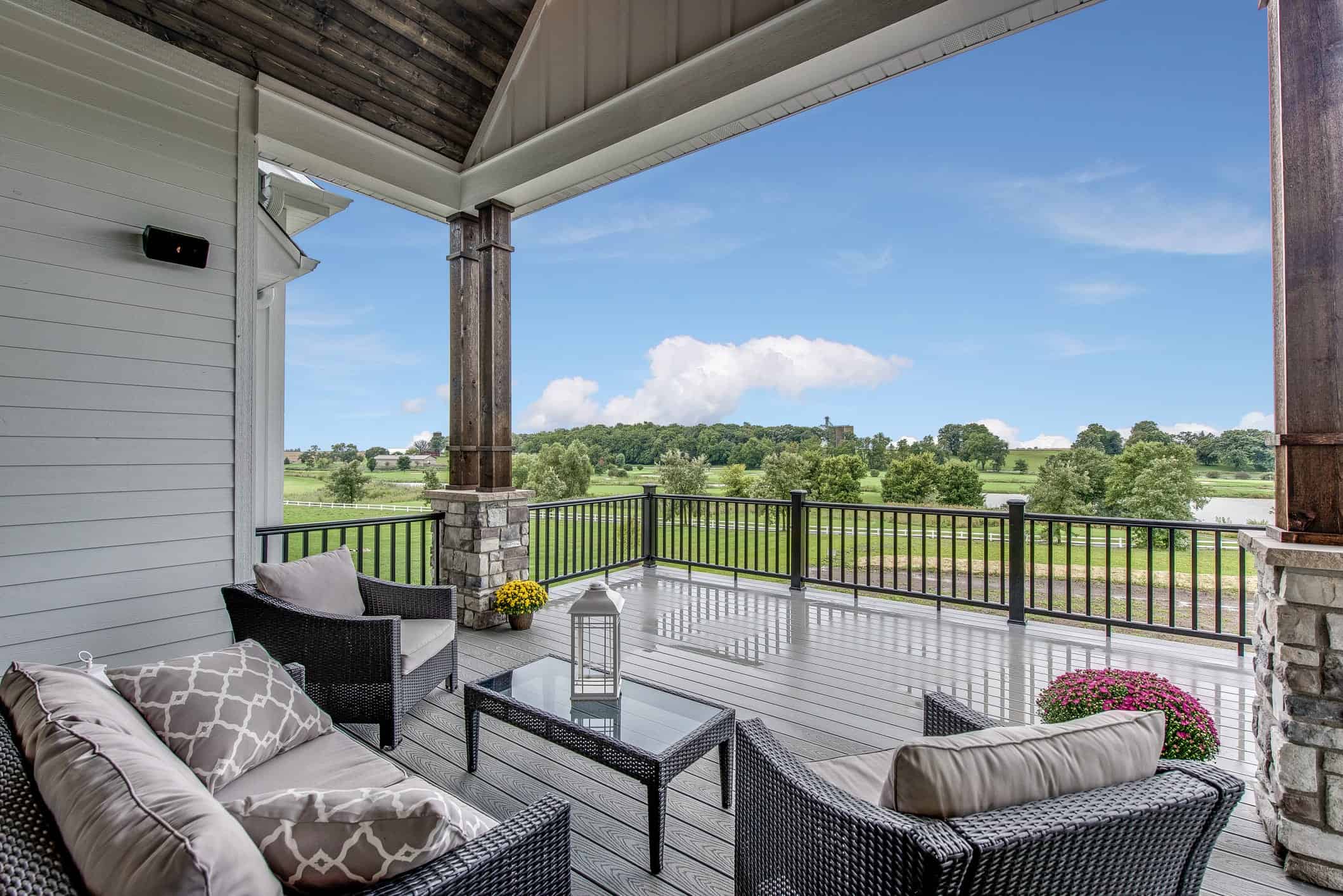
A glimpse of the possibilities — deck design inspiration for a Northern Virginia backyard.
The Two MaterialsComposite vs. wood decking: what’s the difference?
Wood decking is real lumber. Traditionally pressure-treated pine, sometimes cedar, occasionally tropical hardwoods like ipe or mahogany. Pressure-treated is the most common because it accepts stain and sealer well. Cedar and tropical hardwoods step up in appearance and longevity.
Composite decking is an engineered product. It blends wood fibers with recycled plastics into solid or capped boards. The capped versions, sold under brands like Trex, TimberTech, Fiberon, and Azek, add a polymer shell that resists fading, staining, and mold. Uncapped composite is an older format and more vulnerable to wear. PVC and full-plastic decking are a related category with no wood fiber inside.
How Northern Virginia’s climate affects composite vs. wood decking
This is where the two materials really separate. NoVA winters drop below freezing repeatedly. Freeze-thaw cycles drive water into wood, which expands as it freezes. Over years, that opens cracks, splits, and warps the boards. Composite expands and contracts too, but it isn’t penetrated by moisture the same way.
Our summers run humid, which feeds mildew and mold on wood that hasn’t been sealed in the last year. Capped composite resists both. Spring pollen, especially the yellow pine pollen that coats the DMV for weeks, sticks more readily to untreated wood and bites into the finish. It rinses off composite.
UV is the part homeowners miss. Wood greys quickly without periodic refinishing. Modern capped composite carries fade-resistance ratings that hold color for years. Neither is fade-proof. Both work harder here than they would in a milder climate.
How long does composite vs. wood decking last in Northern Virginia?
With reasonable maintenance, pressure-treated pine typically lasts ten to fifteen years on a NoVA deck. Cedar can push fifteen to twenty with regular sealing. Tropical hardwoods like ipe can stretch past twenty-five if maintained.
Capped composite carries manufacturer warranties of twenty-five to thirty years or more, and many installations outlast that in practice. The structure underneath matters as much as the surface. Even a composite top won’t outlive a failing pressure-treated frame, which is why a real builder pays attention to joists, ledger boards, fasteners, flashing, and span tables.
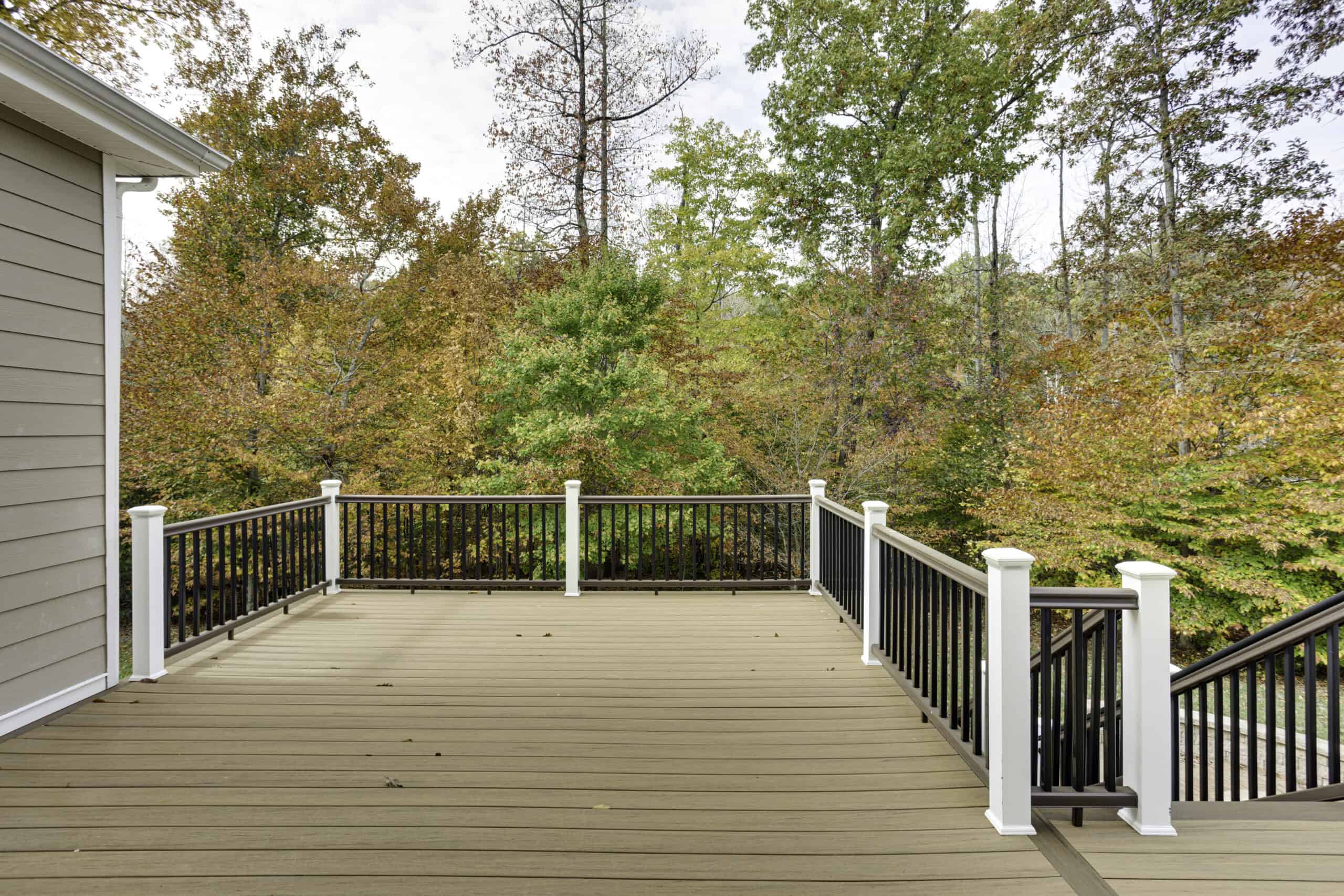
A glimpse of the possibilities — the frame beneath the boards is the quality you can expect from a real build.
Maintenance: what each material actually needs
Wood decks need real upkeep. Plan to clean, stain, and seal every one to three years depending on exposure. Sun-baked decks get the worst of it. Skipping a season shortens the life of the boards. You’ll also tighten fasteners, replace cracked boards as they fail, and watch for end-grain rot where boards meet posts.
Composite needs almost none of that. Wash it twice a year with soap and water, hose off the spring pollen, and that’s most of it. No staining, no sealing, no annual battle with mildew. The trade-off is that composite scratches show up more visibly, and you can’t sand them out. Serious damage means replacing the board rather than refinishing it.
How composite and wood decking age over time
Wood ages with character. A new pressure-treated deck looks green for the first year, settles into a tan you can stain to almost any color, then greys naturally if you let it. For homeowners who want a deck that mellows into the yard, wood does that better than anything synthetic.
Composite holds its day-one appearance for years. The texture is engineered to mimic wood grain, and the higher-end capped products are convincing up close. Underfoot, composite gets hotter in direct sun than wood, which matters most on south-facing decks without shade.
Value over the life of the deck
The honest framing isn’t sticker price. It’s hours and years. Wood demands a maintenance routine season after season, and the boards eventually fail. Composite delivers near-zero upkeep and a far longer functional life, particularly capped composite, which is engineered for the long haul.
The hidden value driver on either material is the frame underneath. Capped composite on a failing pressure-treated frame leaves you redoing the whole project a decade early. The structural choices, joists, beams, fasteners, and ledger flashing, decide how long the deck above actually lasts.
Not sure which material fits your yard, your usage, and your budget? We’ll walk you through both, honestly.
Book a free consultationPermits and code for decks in Northern Virginia
Most NoVA jurisdictions require a permit for any deck attached to the house. Any deck more than thirty inches above grade triggers railing and code requirements under the Virginia Uniform Statewide Building Code. Footings, ledger board attachment, joist spans, and railing strength all get inspected. HOA architectural review applies in many newer neighborhoods on top of the county permit.
Pulling the permit and following the inspection process matters. An unpermitted deck shows up during a home sale and can hold up closing. Our piece on Virginia building permits and codes covers the broader picture.
Composite vs. wood decking: which is better for your Northern Virginia home?
When it comes to composite vs. wood decking for your specific home, composite tends to win for homeowners who want a long-lasting, low-maintenance deck and plan to stay in the home for many years. The surface looks the same in year ten as it did in year one, and weekends stay free.
Wood tends to win for homeowners who want a traditional look, who are comfortable with the maintenance rhythm, or who specifically want a deck that ages naturally with the yard. Cedar and tropical hardwoods sit between the two: better aesthetics and durability than pressure-treated, more upkeep than composite. A real deck builder in Northern Virginia can walk you through both based on how you’ll actually use the space.
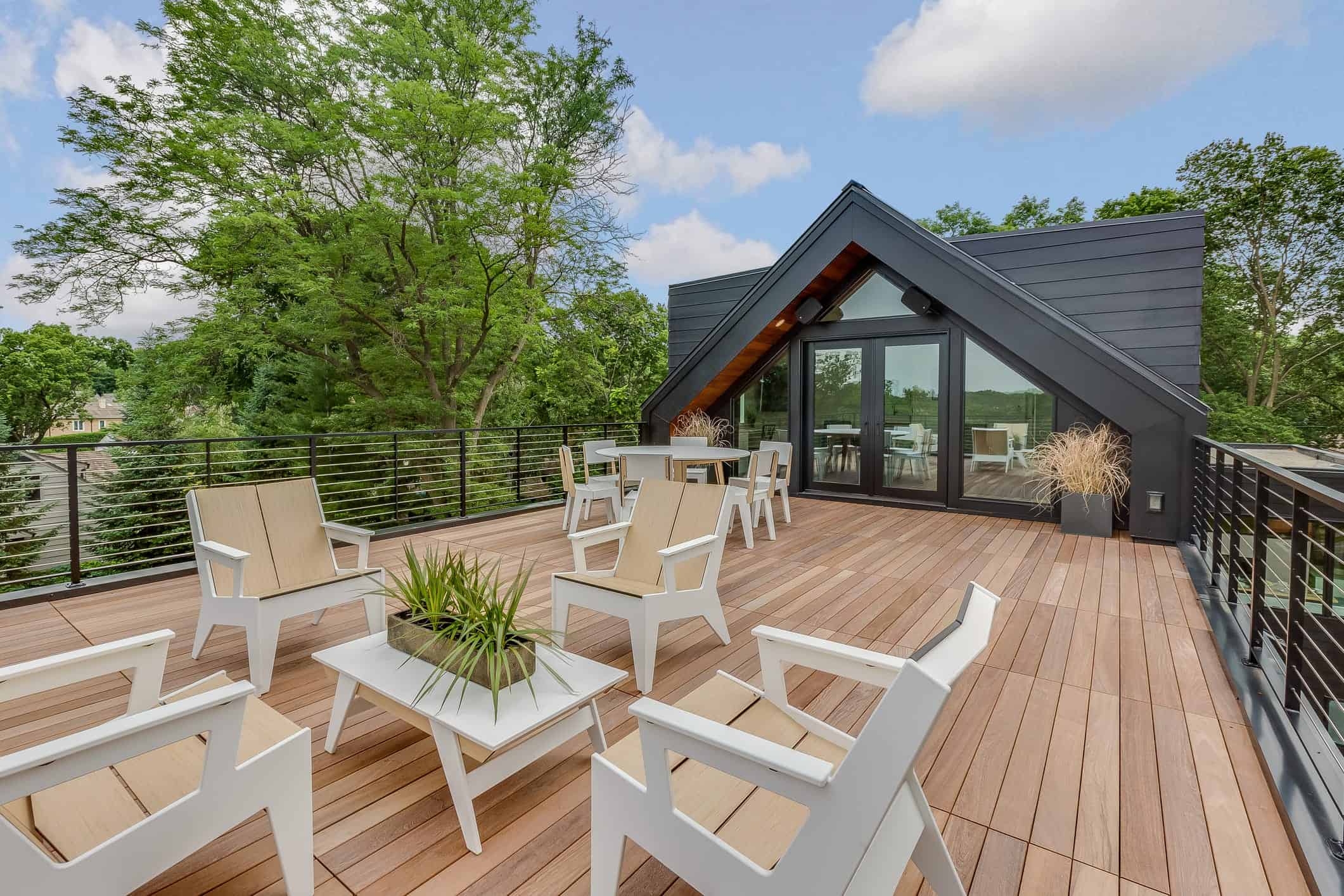
A glimpse of the possibilities — the kind of finished outdoor living space a well-built deck makes real.
Why choose JBL Construct for your Northern Virginia deck
A deck is a structural project that lives outside through everything our region throws at it, and we approach it that way. Our team is licensed through the Virginia Department of Professional and Occupational Regulation, fully insured, and experienced across Fairfax, Arlington, Loudoun, McLean, and Vienna. We build in both composite and wood, which means we recommend the material that actually fits your home, your usage, and your yard, not the one we happen to install most often. That neutrality is rare, and it matters.
Design and construction live under one roof at JBL, so the same people who design your deck are the ones who build it. That alignment keeps the plan and the budget in step from the first walk-through to the final inspection, and it removes the finger-pointing that happens when a separate designer and contractor hand work off mid-project. You can see a sense of our work in our project gallery, and our design-build process page walks through exactly how a project moves from first conversation to finished deck.
Ready to plan your deck in Northern Virginia?
Whether you’re leaning composite or wood, or still weighing composite vs. wood decking for your home, the right team walks you through both options honestly and helps you pick what fits. Reach out to our deck builders in Northern Virginia or get started here, and we’ll set up a time to look at your space.
Frequently asked questions
Is composite or wood decking better in Northern Virginia’s climate?
Composite generally handles NoVA’s freeze-thaw, humidity, and pollen with less wear than wood. Wood performs well too but needs consistent staining and sealing to keep up.
How long does composite vs. wood decking last in Northern Virginia?
Capped composite carries manufacturer warranties of twenty-five to thirty years or more. Pressure-treated wood typically lasts ten to fifteen here, cedar fifteen to twenty, and tropical hardwoods longer with maintenance.
Do I need a permit to build a deck in Northern Virginia?
Yes, in nearly every NoVA jurisdiction, especially for any deck attached to the house or above thirty inches in height. HOA architectural review may also apply.
Can I install composite decking over my old wood frame?
Only if the frame is structurally sound and meets current code. A failing pressure-treated frame should be rebuilt before new boards go on, regardless of surface material.
Which decking material is best for resale value?
Composite appeals to buyers who want low maintenance. Wood appeals to those who want traditional aesthetics. Build quality and condition matter more than material choice.
Every project starts with a look at your actual space, not a phone estimate. Schedule a free consultation with Jay to talk through composite, wood, and what fits your home.
Schedule a free consultation
Jay Nath
With a background in project management across finance, pharmaceuticals, and technology — combined with hands-on construction experience through fix-and-flip projects — Jay brings a rare combination of process discipline and on-site craft to every home addition, deck, and remodel his team delivers across Fairfax, Arlington, Loudoun, and Prince William counties.