
ADU Builder in Northern Virginia: What the Rules Actually Look Like in Each County
Nobody searching for an ADU builder in Northern Virginia is looking for a general answer. They’re in Ashburn or Woodbridge or Berryville with a specific lot, a specific house, and specific goals. And which county those things sit in changes almost everything about whether a project is feasible, what it costs, and how long it takes.
That’s not how most ADU content is written. Most of it treats the whole region as one market with one set of rules. It isn’t.
Fairfax County doesn’t use the word ADU in its zoning ordinance at all. Arlington limits detached structures in ways most homeowners don’t discover until they’re already planning. Loudoun is the most flexible county in our service area, and the lot sizes are a big part of why. Clarke County is the one where homeowners have the hardest time finding anyone willing to make the drive.
JBL Construct builds ADUs across Fairfax, Arlington, Loudoun, Prince William, Fauquier, and Clarke counties. See our ADU service page for the full scope of what we handle. What follows is what we cover in the first feasibility conversation with any homeowner, broken out by county.
Why the County Comes Before Any Other Question
The first thing we ask when a homeowner contacts us about an ADU project: which county? Not what size, not what budget, not what they saw on a home renovation show. County first.
It changes the local term used in the zoning code, which matters when you’re searching the permit portal or talking to a planner. It changes the maximum size allowed for interior units, whether a detached structure needs a Special Permit or can go through standard administrative review, what parking the county will require, and which inspectors you’ll be working with from permit application to final sign-off.
| County | Local Term | Interior Size Cap | Detached Path | One Thing to Know |
|---|---|---|---|---|
| Fairfax County | ALU | 800 sq ft or 40% of home GFA, whichever is less | 2-acre lot minimum + Special Permit required | 2-acre rule blocks most homeowners from detached |
| Arlington County | AD | 750 sq ft gross floor area, or 35% of the combined house and unit area, whichever is less. No size cap for a unit wholly within the basement. | Allowed. Detached footprint capped at 560 sq ft in R-5 and R-6 districts, 650 sq ft in other R districts | The footprint cap, not just floor area, is what usually decides feasibility |
| Loudoun County | ADU | Varies by zoning district | By-right on qualifying lots | Best county in our area for backyard builds |
| Prince William | ADU | Varies by zoning district | Permitted with conditions | Labor runs lower; HOA is the bigger variable |
| Warrenton / Fauquier | ADU | Town and county ordinances differ | Available on larger lots | Large lots, carriage house conversions viable |
| Clarke County | ADU | Under 600 sq ft; 6-acre lot min in AOC/FOC zones | Only on 6+ acre parcels in AOC/FOC zones | Most residential lots do not qualify |
Accurate as of 10 October 2026. Fairfax County uses “Accessory Living Unit” (ALU) as the official term; in Fairfax, “ADU” officially means Affordable Dwelling Unit, a separate programme. Fairfax’s proposed ALU amendment has not been adopted: the Planning Commission hearing is 29 October 2026 and the Board of Supervisors hearing is 17 November 2026. Virginia SB 531, signed in 2026, takes effect in July 2027. Confirm current rules with your county before planning.
All six counties allow secondary dwelling units of some kind. The differences are in size limits, how detached structures are handled, owner-occupancy rules, and permit path complexity. The county determines what’s possible before anything else does.
ADU Builder in Fairfax County VA
Fairfax County calls these Accessory Living Units. ALUs. Not ADUs. When you’re talking to the permit office, searching the county’s online portal, or reviewing the zoning ordinance, you want the right term or you’ll create confusion before the project even starts. We work with Fairfax County’s permit office regularly enough to know which reviewers handle ALU applications and what they look for when comments go back and forth. That familiarity is worth something.
The size formula that surprises almost everyone
Interior ALUs in Fairfax are capped at 800 square feet or 40% of the main home’s gross floor area, whichever is smaller. The second part is what people don’t expect. A 1,800 square foot home doesn’t give you 800 square feet to work with. It gives you 720. A 1,500 square foot home gives you 600. The county measures gross floor area, which can include spaces calculated differently than a tape measure would suggest, and the number your planner lands on may not match what you assumed going in.
We’ve sat across from homeowners who’d already paid architects for 780 square foot unit plans, confident their house size justified it. It didn’t.
The two costs Fairfax basement estimates almost never include
Egress windows. Every sleeping room in the ALU needs an egress-compliant window sized to Virginia’s building code for emergency exit. Most older Fairfax basements have small hopper windows that don’t come close. Cutting a proper opening means foundation work, excavating a window well, installing the unit, and matching the exterior. Add $15,000 to $30,000 to your estimate if this work is needed. Most quotes you’ll find online don’t include it because the contractor hasn’t seen the property yet.
Ceiling height. Virginia’s Uniform Statewide Building Code sets 7 feet of clear ceiling height as the minimum in habitable rooms. Many Fairfax basements run at 6 feet 10 inches after ductwork and structural members. Getting to 7 feet can involve lowering the slab, modifying beam depths, or rerouting mechanical systems. We check this on the first site visit because it determines whether a basement conversion is financially viable for that specific house, not in general.
Detached structures and the 2-acre rule most homeowners don’t know
Interior ALUs go through the standard administrative permit. When the submission is complete and correct, Fairfax targets around 30 calendar days. Detached backyard structures are a different process entirely, and the first barrier isn’t the Special Permit. It’s lot size. Fairfax County requires a minimum of 2 acres to build a detached ALU. Most Fairfax homeowners are on lots well under that threshold, which means a standalone backyard structure isn’t available to them regardless of the permit path. For those who do have 2 acres, a Special Permit through the Zoning Evaluation Division is still required, involving staff review and sometimes a public hearing. That combination of lot size minimum and Special Permit is why most Fairfax homeowners end up pursuing interior conversions.
2026 cost ranges for Fairfax County ALUs
- Basement conversion: $75,000 – $145,000 (lower end for straightforward layouts; upper end when egress window excavation and ceiling height work are required)
- Garage conversion: $80,000 – $140,000 depending on slab condition and exterior matching
- Attached addition: $275,000 – $375,000 and up
ADU Builder in Arlington VA
Arlington County uses the term Accessory Dwelling. AD. The county is among the densest in the country and the ADU rules reflect that. Small lots. Tight setbacks. Labor costs higher than every other county in our service area.
Most Arlington homeowners who contact us about a backyard ADU end up building an interior conversion. Not because we talked them out of it. Because the lot math rarely works for a detached structure on a standard Arlington parcel. Setback requirements leave a buildable footprint too small to construct something worth the cost. If your Arlington lot is large enough, we’ll evaluate it. A few have gone through the Special Permit process and built. Most haven’t.
What the size limits actually are
Detached units in Arlington are capped at 560 to 650 square feet depending on the zoning district. Basement conversions don’t have a hard square footage ceiling beyond the existing walls, but the same egress and ceiling height requirements from Virginia’s building code apply here. That 7-foot clearance requirement trips up Arlington basements just as often as Fairfax ones.
On the cost side
A scope that runs $125,000 in Prince William will come in closer to $155,000 in Arlington. That gap is labor. Arlington carries the highest labor rates in our service area, and the finish quality the market expects is real. A cheaply finished basement apartment in Arlington reads that way to renters and buyers, and it shows in both the rent you can charge and the appraised value when you sell.
2026 cost ranges for Arlington County
- Basement conversion: $90,000 – $165,000 (Arlington labor premium adds 15–20% over Fairfax)
- Garage conversion: $95,000 – $145,000
- Attached addition: $295,000 – $400,000 and up
ADU Builder in Loudoun County VA
Loudoun is the county we have the most room to work in. Large lots are common. Detached backyard units can go through standard administrative review on qualifying properties without a Special Permit or public hearing. And Loudoun’s permit offices process residential ADU applications regularly, which means reviewers are familiar with them rather than treating each one as an unusual request.
Why the detached path works here
In Fairfax and Arlington, a detached backyard structure triggers a separate, longer review track that most homeowners step back from once they understand what’s involved. In Loudoun, a qualifying property can get by-right approval through standard permit processing. Same Zoning Permit, same Building Permit, same inspection sequence as any other residential project. The county reviews it as a permitted use rather than an exception. That’s a meaningful practical difference.
Qualifying still depends on your specific zoning district, lot size, and setbacks. It’s not automatic. But the path is administrative rather than discretionary, and that changes the timeline and the predictability.
HOA: the thing Loudoun homeowners most often forget
Ashburn, Brambleton, Lansdowne, Broadlands. These communities have active architectural review processes. The county saying yes doesn’t mean the HOA says yes. Some allow ADUs with design standards attached. Some don’t permit detached structures at all. We check both before any design work begins. Finding out at permit submission that the HOA restriction invalidates the project wastes months and real money.
2026 cost ranges for Loudoun County
- Basement conversion: $70,000 – $130,000
- Garage conversion: $75,000 – $120,000
- Attached addition: $250,000 – $350,000 and up
- New detached construction: $250,000 – $350,000 and up
A free feasibility review tells you what your county, zoning district, and lot actually support — before you spend anything on design.
Book a Free Feasibility ReviewADU Builder in Prince William County VA
Prince William County has been appreciating fast. Homeowners in Woodbridge, Manassas, Gainesville, and Dale City are increasingly interested in ADUs as a way to add rental income or multigenerational space without having to move in a market where buying up is expensive.
ADUs are permitted in Prince William’s single-family residential zones. Detached structures are allowed with conditions and the review path is less complex than Fairfax’s. Owner-occupancy requirements run similar to the other counties. Labor costs are lower here than in Fairfax and Arlington, which on a $120,000 to $150,000 project is a number worth knowing.
Check the HOA before anything else in Prince William
A significant portion of communities in Woodbridge and Dale City have HOA covenants that restrict exterior modifications or detached structures. Some were written before ADUs were common and don’t address them clearly. We treat HOA verification as a required step before design begins in this county. It saves the homeowner from a situation we’ve seen more than once: full plans completed, permit application ready, and then the HOA says no.
2026 cost ranges for Prince William County
- Basement conversion: $65,000 – $125,000
- Garage conversion: $70,000 – $110,000
- Attached addition: $230,000 – $325,000 and up
- New detached construction: $125,000 – $210,000 and up
ADU Builder in Warrenton VA and Fauquier County
Warrenton has its own municipal government and its own zoning ordinance. Unincorporated Fauquier County follows county-level rules. The two can differ in ways that matter for permit path and approval requirements. Which side of the town line your property sits on is one of the first things we confirm.
Properties in Fauquier County tend to run large. Half an acre is common. An acre or more isn’t rare. That scale opens up ADU options that simply don’t exist in Fairfax or Arlington: real detached backyard structures, carriage house conversions, workshop-to-ADU projects, and guest cottages built to complement a rural or farmhouse-style primary home. A lot of Fauquier County properties also have no HOA at all, which removes a review layer that adds time in the planned communities further north.
If your property is within the Town of Warrenton
Parts of Warrenton’s residential core fall within a historic district. Exterior materials, window proportions, and siding finishes may need to meet the district’s design standards before the town issues a permit. It’s not an obstacle if you plan for it. We check historic district status before design begins on any town property.
2026 cost ranges for Warrenton and Fauquier County
- Basement conversion: $65,000 – $120,000
- Garage conversion: $65,000 – $105,000
- Attached addition: $215,000 – $310,000 and up
- New detached construction: $115,000 – $195,000 and up
ADU Builder in Clarke County VA
Clarke County has the most restrictive ADU rules of any county in this guide, and that needs to be said upfront.
In Clarke County’s agricultural zoning districts, ADUs are only permitted on parcels of six acres or more. The unit must be under 600 square feet, house no more than two people, and sit within 300 feet of a primary home that is itself over 600 square feet. This applies in the AOC (Agricultural-Open Space-Conservation) and FOC (Forestal-Open Space-Conservation) zoning districts that cover most of the county’s unincorporated land.
What that means practically: most homeowners in Clarke County on typical residential lots of one to three acres cannot build an ADU under current county rules. If you own a qualifying agricultural or forestal tract of six or more acres, the path exists within those constraints. If you don’t, it doesn’t.
We include Clarke County in our service area because we do take on projects there, including home additions, renovations, and work on qualifying large-acreage properties. But if someone contacts us about an ADU in Clarke County, the first thing we determine is whether their property even qualifies before any other conversation happens.
Before making any plans, verify your specific parcel and zoning district directly with the Clarke County Planning and Zoning Department. Rules for properties inside the Town of Berryville may differ from unincorporated county land.
Cost ranges for Clarke County projects
For qualifying properties where an ADU is permitted, cost ranges reflect the county’s rural labor market, which runs lower than Fairfax and Arlington but involves additional logistics for material delivery and contractor access on larger tracts.
- Basement conversion (where feasible): $80,000 – $120,000
- Garage conversion: $65,000 – $105,000
- Attached addition: $200,000 – $290,000 and up
- New detached construction (6+ acre lots only): $110,000 – $185,000 and up
2026 ADU Cost Comparison Across All Six Counties
Labor is the primary driver of cost differences between counties. Arlington and Fairfax run highest. Clarke and Fauquier run lowest. Egress window work, ceiling height modifications, HVAC approach, and finish level move the number in any county. These are planning ranges, not quotes. An estimate without a site visit isn’t one.
| County | Basement Conv. | Garage Conv. | Attached Addition | New Detached Build |
|---|---|---|---|---|
| Fairfax County | $75K – $145K | $80K – $140K | $275K – $375K+ | 2-acre lot + Special Permit |
| Arlington County | $90K – $165K | $95K – $145K | $295K – $400K+ | Very limited on most lots |
| Loudoun County | $70K – $130K | $75K – $120K | $250K – $350K+ | $150K – $250K+ |
| Prince William | $65K – $125K | $70K – $110K | $230K – $325K+ | $125K – $210K+ |
| Warrenton / Fauquier | $65K – $120K | $65K – $105K | $215K – $310K+ | $115K – $195K+ |
| Clarke County | $80K – $120K* | $65K – $105K* | $200K – $290K+* | 6-acre minimum lot required |
Prices reflect current 2026 Northern Virginia labor and material conditions. Final costs are determined after site assessment and design. *Clarke County ADU costs apply only to qualifying parcels of 6 acres or more in AOC/FOC zoning districts. Most standard residential lots in Clarke County do not qualify for ADU construction under current rules. Verify with Clarke County Planning and Zoning before making any plans.
The Rules That Apply in Every County
Owner-occupancy. In all six counties, either the main home or the ADU has to be your primary residence. You can’t build one and rent both units while living somewhere else. One of them is where you live.
No short-term rentals. Airbnb-style stays aren’t permitted for ADU units in any of these jurisdictions. Minimum lease terms apply. Virginia’s 2025 landlord-tenant law added first-page disclosure requirements to all residential leases, ADU rentals included, covering rent amounts, security deposits, and fees.
Egress and ceiling height. Virginia’s Uniform Statewide Building Code sets 7 feet of clear ceiling height as the floor for habitable rooms and requires egress-compliant windows in every sleeping room. These are state building code requirements, not county rules. They apply everywhere. For basement conversions they’re the first thing we check on a site visit, because they’re often what determines whether a project is worth pursuing on that specific property.
Nothing starts before permits are in hand. No county in Northern Virginia allows unpermitted residential dwelling units. JBL Construct doesn’t begin work before permits are issued. No exceptions, no workarounds.
An Unpermitted Basement Apartment Is a Liability, Not an Asset
Fairfax, Arlington, and Prince William all have a lot of homes with finished basements, separate entrances, and kitchens that were built without county permitting. Some are well built. Some aren’t. Neither is a legal dwelling unit.
The problem surfaces at closing. Buyer inspectors flag it. Agents in this market know what to look for. Lenders ask more questions than they used to. And the conversation happens when the deal is already in motion and renegotiating is expensive.
We’ve talked to homeowners trying to sell who couldn’t close because of a basement apartment they’d been renting for years. It’s a fixable problem. It’s a lot more expensive to fix under that kind of deadline.
A permitted ADU adds verified square footage to the public record and carries rental income potential a buyer can actually account for. If you have an existing unpermitted space, a feasibility conversation can help figure out whether retroactive permitting is practical and what it would actually take.
Why Northern Virginia Homeowners Work with JBL Construct
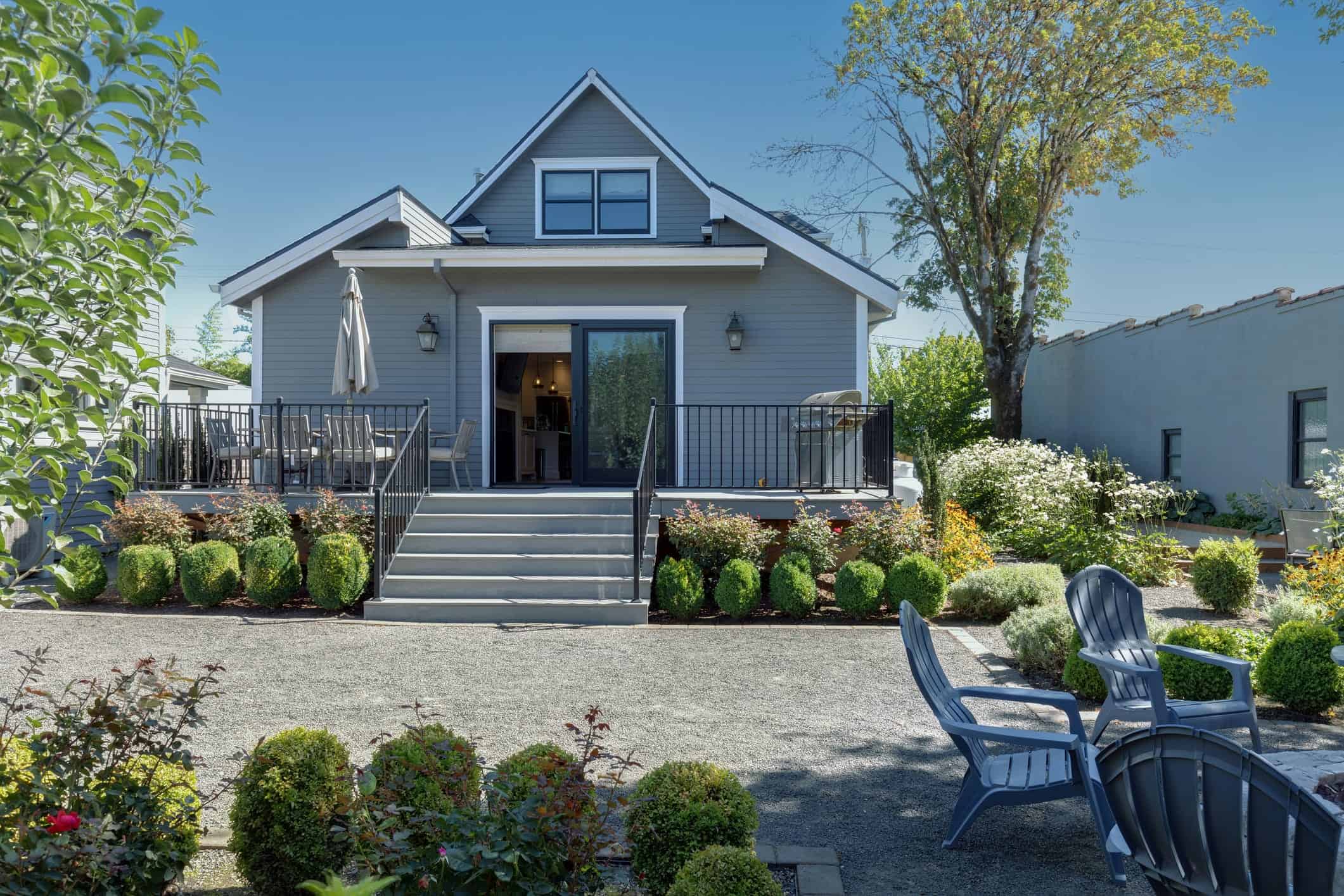
JBL Construct is a Class A licensed contractor in Virginia, DPOR 2705196687. We work exclusively in residential construction across all six counties in this guide. That focus matters because Fairfax County’s permit office, Arlington’s zoning terminology, Loudoun’s by-right approval path, and Clarke County’s rural permitting environment aren’t things we’ve read about. They’re what we navigate every week.
We start every project with a feasibility review, not a design session. Before you spend money on architectural drawings or anything else, we need to confirm what your lot and zoning district actually support. We’ve talked with homeowners who’d already paid architects for plans on a project the county wasn’t going to approve in the form designed. A good local contractor should catch that at the first meeting.
Jay manages every project directly. You’re not handed to a coordinator relaying information from someone else. If something comes up during construction and a decision needs to be made, you’re talking to the person who built it.
Read more about how we run ADU projects from start to finish, or book a free feasibility consultation to talk through your specific property and county. No ballpark numbers before we’ve seen the lot. No designs before we’ve confirmed what the county will approve.
Call (571) 464-0684 or visit jblconstruct.com. Virginia Class A Licensed, DPOR 2705196687.
Every ADU project starts with a free feasibility review. We confirm your county rules, lot qualifications, and realistic costs before anything else.
Book Your Free ConsultationQuestions We Get Before Every ADU Project in Northern Virginia
When you’re on the phone with a county planner or searching the permit portal, yes. The wrong term in the wrong portal returns different results, and using unfamiliar language with reviewers signals that you haven’t read the local rules. It won’t kill an application. It slows it down.
Not automatically. By-right approval is available for qualifying lots, but qualifying depends on your specific zoning district, lot dimensions, and setbacks. HOA covenants in communities like Ashburn and Brambleton add a second layer of review. Most Loudoun lots can support something. Some can’t. A feasibility review tells you which.
No. Owner-occupancy is required in all six counties. You or an immediate family member has to live in one of the units. Long-term leasing of the other unit is permitted. Short-term rentals are not. That’s a hard rule across the entire region, not a gray area.
Basement conversions start around $85,000 in Clarke County and run to $175,000 in Arlington for a fully equipped unit. Garage conversions run $70,000 to $150,000 depending on county and scope. A new detached build in Loudoun or Prince William runs $130,000 to $250,000 and up. The variables that move the number most: egress window work in basements, ceiling height modifications, whether the unit gets its own HVAC or a zone off the main system, and kitchen scope. Full kitchen versus kitchenette is a $15,000 to $25,000 difference on its own. We don’t give numbers before visiting the property because a quote built without site information isn’t a quote.
Not necessarily, but you need to understand what you’re sitting on. An unpermitted space isn’t a legal dwelling unit regardless of how long it’s been rented. The risk surfaces at resale, when it gets flagged during due diligence. Whether retroactive permitting is viable depends on how the space was built and what code updates would be required. Some can be brought into compliance for a reasonable cost. Others need more significant work. We can assess that for your specific property.
Everything. Zoning permit application, building permit application, construction drawings, county submission, responding to review comments, and scheduling all inspections through final sign-off. You don’t manage the county relationship. We do. Before any of this starts we run a feasibility review to confirm the project is viable for your lot and zoning district. We’ve had that review turn up problems that would have derailed the project mid-permit. Better to know early.
Start With Your County, Not With a Budget
Most ADU projects that go wrong, go wrong in the planning stage. Not the construction stage. A homeowner in Arlington spends money on plans for a backyard cottage that the lot can’t support. A Fairfax homeowner designs for 800 square feet and finds out the county caps them at 640. A Prince William homeowner gets designs drawn before learning the HOA won’t approve them.
The county shapes the project. We start there. The feasibility review costs you nothing, and it’s the thing that tells you whether what you have in mind actually works on your specific lot before anyone spends money on anything.
If it works, we walk you through exactly what it looks like from first permit to final inspection. If it doesn’t, we’ll tell you why and what alternatives exist. Book a free consultation here, or call (571) 464-0684.
Book a free feasibility review and find out exactly what your property supports before spending a dollar on design.
Book Your Free Feasibility Review(571) 464-0684 · jblconstruct.com · Virginia Class A Licensed, DPOR 2705196687