
When planning a complete house renovation in Northern Virginia, the legal framework is just as critical as the architectural design. Navigating the Virginia Uniform Statewide Building Code (USBC) ensures your home is not only beautiful but also safe, legal, and fully insurable. The 2021 edition of the USBC, which became mandatory for all new permit applications as of early 2025, introduces stricter standards for energy efficiency, structural resilience, and fire safety.
At JBL Construct, we believe a premium renovation should be a stress-free experience. That is why we manage the entire permitting lifecycle for you, from initial drafting to the final county sign-off—so you never have to set foot in a government office.
When Do You Actually Need a Permit in Virginia?
In Northern Virginia, the line between a “cosmetic update” and a “permitted renovation” is strictly defined. While you don’t need paperwork to paint or install new carpet, almost any project that alters the structural integrity or core systems of your home requires a permit. Understanding these boundaries prevents costly “Stop Work” orders from county officials.
Projects That Require a Permit:
- Structural Changes: Moving or removing any wall (load-bearing or not), altering floor joists, or changing the roofline.
- Basement Finishing: Converting unfinished space into legally recognized living areas. This often requires egress windows and specific ceiling heights.
- Kitchen & Bath Overhauls: Moving plumbing fixtures, adding new electrical circuits, or installing gas-powered appliances.
- Window/Door Modifications: Creating new openings or enlarging existing ones. Note that same-size replacements typically do not require a building permit, but may require an energy compliance check.
- Home Additions: Any expansion of the home’s footprint, including sunrooms, garages, and bumped-out kitchens.
- Decks: Any deck attached to the house or any freestanding deck exceeding 256 square feet or 30 inches in height.
Understanding Local Zoning Laws (Fairfax, Loudoun, etc.)
While the building code (USBC) is statewide, zoning ordinances are hyper-local. Zoning dictates the “where” and “how much” of your project, focusing on property rights, community standards, and environmental impact.
- Fairfax County: Utilizes the PLUS (Planning and Land Use System). Zoning here focuses heavily on setbacks—the minimum distance required between your home and the property line. Fairfax also has strict rules regarding Accessory Living Units (ALUs).
- Loudoun County: Known for strict regulations regarding LandMARC submissions. Homeowners must be aware of the Limestone Overlay District, which requires specialized geotechnical reports before any major custom home building or heavy renovation begins.
- Arlington County: Implements some of the strictest Lot Coverage and Resource Protection Area (RPA) rules in the state. These limit the percentage of your lot that can be covered by buildings or pavement to manage stormwater runoff.
| County | Submission System | Primary Zoning Focus |
| Fairfax | PLUS | Setbacks and ADUs |
| Loudoun | LandMARC | Soil types and historic districts |
| Arlington | Permit Arlington | Lot coverage and RPA zones |
| Prince William | ePortal | Watershed protection |
2026 House Renovation Costs in Northern Virginia
Understanding house renovation costs is the first step in successful project planning. In the DC Metro area, costs typically trend 20–30% higher than national averages due to premium labor rates and strict compliance standards.
Average Cost per Square Foot
For a full house renovation, Northern Virginia homeowners should budget based on the following 2026 market tiers:
- Standard Refresh: $100 – $150 per sq. ft. (Includes painting, flooring, and minor updates).
- Mid-Range Renovation: $150 – $250 per sq. ft. (Includes kitchen and bathroom remodeling with semi-custom finishes).
- High-End/Luxury: $300 – $450+ per sq. ft. (Includes structural changes, custom cabinetry, and high-performance mechanical systems).
Budget Breakdown by Project Type
| Project Room | Mid-Range Cost | High-End/Luxury |
| Kitchen Remodel | $75,000 – $115,000 | $150,000 – $300,000+ |
| Master Bathroom | $40,000 – $60,000 | $75,000 – $90,000+ |
| Basement Finish | $100,000 – $175,000 | $200,000 – $300,000+ |
| Home Addition | $350 – $450/sq. ft. | $500 – $700/sq. ft. |
Disclaimer: The pricing figures provided herein represent broad, approximate ranges based on current 2025 market trends and do not constitute a fixed-price quotation or binding contractual agreement. These estimates are provided on a best-endeavors basis; the final price may be higher or lower based on specific project scope, site conditions, and material selections finalized during the design phase.
The Risks of Unpermitted Work: Resale and Safety
Skipping the permit office may seem like a shortcut, but it creates significant long-term liabilities that can be far more expensive than the permit itself.
- Resale Roadblocks: Savvy buyers and lenders cross-reference home layouts with county records. Unpermitted work can stall a sale, forcing you to pay for “as-built” permits that often require tearing out finished drywall so inspectors can see the hidden wiring.
- Insurance Denial: If an electrical fire or flood occurs in an unpermitted area, your insurance carrier may legally deny the claim, leaving you personally responsible for all damages.
- Safety Hazards: Permits are your safety net. They ensure your “Modern Heritage” design is backed by structural science, preventing issues like improper deck flashing or undersized floor joists.
- Tax Assessment Issues: If the county discovers unrecorded square footage, you may be hit with back taxes and penalties for the duration the renovation has existed.
The Permit Process: From Application to Final Inspection
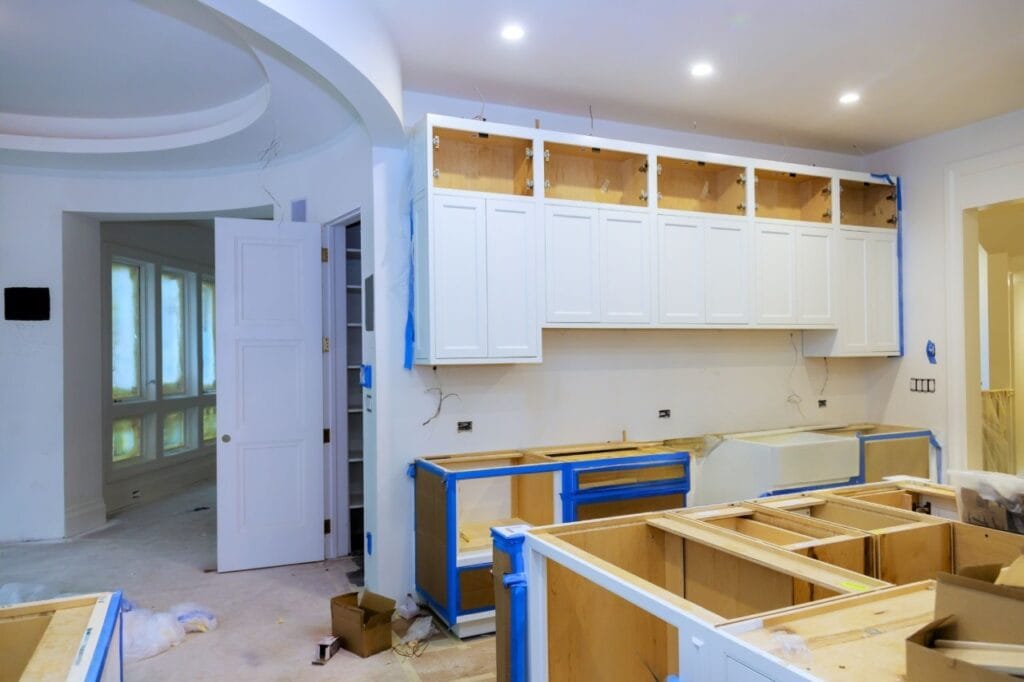
A standard professional renovation follows a clear legal timeline, which JBL Construct handles entirely on your behalf:
1. Plan Review and Architectural Drafting
We submit detailed architectural blueprints and 3D renderings for county approval. This includes site plans showing property lines and detailed “cross-sections” showing exactly how walls and floors are constructed.
2. Issuance of Trade Permits
Once the building permit is “stamped,” trade-specific permits are issued. These include:
- Electrical: For all new wiring, panels, and lighting.
- Plumbing: For moving pipes, adding gas lines, or installing new fixtures.
- Mechanical (HVAC): For ductwork changes or new furnace/AC units.
3. Rough-In Inspections
These occur after the “guts” of the house are installed but before the walls are closed. The inspector checks:
- Framing: To ensure structural loads are properly supported.
- Electrical Rough-In: To verify wire gauges and outlet spacing.
- Plumbing Rough-In: To check for leaks and proper venting.
4. Insulation and Drywall Inspections
Modern 2026 standards require a separate insulation inspection to ensure R-values (like R-49 or R-60 in attics) meet the new energy code before drywall covers the evidence.
5. Final Inspection
The county issues a final sign-off, confirming the project is safe and compliant. Only after this step is the project legally “finished”.
How JBL Construct Simplifies the Legal Side of Your Project
Navigating the bureaucratic maze of Northern Virginia’s building departments is a full-time job. We take that burden off your shoulders so you can focus on the excitement of your new home. Our “service” approach means we don’t just build; we advocate for your project at the county level.
As your house renovation contractor, we provide a full suite of house renovation services including:
- Expert Drafting: We create permit-ready plans that meet the latest 2026 USBC standards.
- Home Additions: Strategic expansions that comply with local setback and lot coverage laws.
- Custom Home Building: Complete ground-up construction following the highest Virginia standards.
- Liaison Services: We manage all communications and digital submissions through systems like PLUS and LandMARC.
- On-Site Representation: JBL Construct is physically present for every county inspection, ensuring your project meets every safety benchmark.
By choosing a professional house renovation company, you aren’t just paying for a high-end finish—you are investing in the peace of mind that your home is 100% legal, insurable, and built to the highest safety standards in Virginia.
Successful renovations in Northern Virginia depend on strictly adhering to local building codes and zoning laws. From understanding the PLUS system in Fairfax to managing R-60 insulation requirements and calculating house renovation costs, JBL Construct handles every detail. This ensures your complete house renovation is safe, adds real market value, and is completed without the stress of government bureaucracy.
Ready to start your project? Contact us today to discuss your home’s potential.