
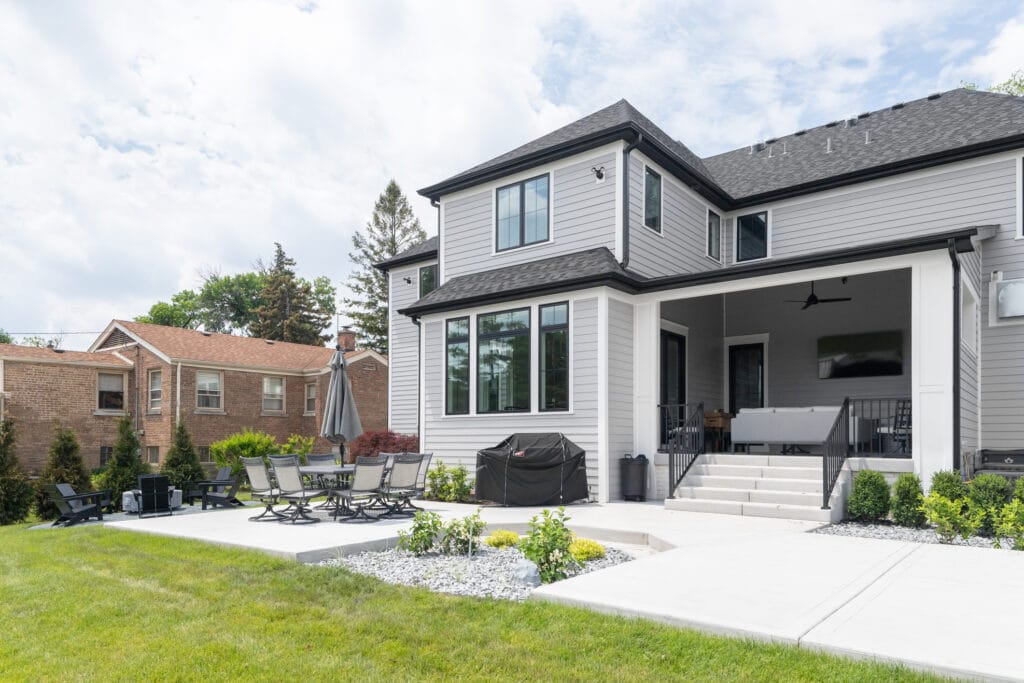
Why Northern Virginia Homeowners Are Adding On, Not Moving Out
If you have ever considered the need for additional living space, you likely know how dire the situation has become in Northern Virginia. Home prices in Fairfax, Loudon, Arlington, and Clarke Counties have surged in recent years, and with stagnant inventory, the situation for buyers is only becoming more challenging.The solution is obvious: expanding your home.
For many families, the smarter path has become clear: expand the home you’re already in. It’s not just about the money, although that is certainly a big part of it. There is also real value in staying in the same school district you’re familiar with, keeping your usual routine, and being close to the same neighbors and community you’ve built. A house addition in Northern Virginia can provide the extra space that you’re looking for without having to relocate your life.
This guide covers all you need to know, from the difference between a small bump-out addition and a full structural addition, to just what zoning regulations really are in your county, to just how much these projects cost in 2026.
Bump Out vs. Full Addition: Which One Do You Actually Need?
This is usually the first question homeowners ask and the answer can make a huge difference in terms of budget, timeframe, and disruption level.
What is a bump out?
A wall extension is an addition to an existing room. In other words, you add space to an area by moving one wall outward, usually by 2-3 feet. Examples include adding space to your kitchen for an island, adding space to your first-floor bathroom, and adding space to your living room for a bay window.
A bump out is easier and cheaper than an addition. A bump out is limited. A bump out is good for you only if you need to fix one problem in your home.
What is a full home addition?
A full addition is a new structure that is added to your existing home. This can be anything from a primary suite or a garage addition to a mother-in-law addition or even a second-story addition. A full addition requires a new foundation, extensive permitting, and a longer construction time.
Here’s a comparison to make it easy to see the difference at a glance:
| Bump-Out | Full Addition | |
| Scope | Expand an existing room 2–10 ft | New room, floor, or garage |
| Typical Cost | $20,000 – $60,000 | $80,000 – $300,000+ |
| Permit Required | Yes, in most NoVA counties | Yes, full building permit |
| Foundation Work | Minimal | New foundation required |
| Best For | Expanding a kitchen, bath, or living room | Adding bedroom, ADU, or 2nd floor |
| Timeline | 4 – 8 weeks | 3 – 8 months |
Not sure which category your project falls into? The team at JBL Construct works with NoVA homeowners to figure out the right scope before a single permit is filed.
Addition vs. Buying a New Home: The Numbers in Today’s NoVA Market
Here’s a question worth sitting with: if you need more space, why not just buy a bigger house?
It’s a good thought, until you do the math. As of 2026, the average 30-year fixed mortgage rate in Northern Virginia is in the 6.5 – 7% range. If you purchased your current house in 2019 or 2020 for a rate below 4%, moving means giving up a loan that you’ll likely never find again.
A simple scenario
For example, let’s say your home is worth $650,000, and you’re considering adding a 600 sq ft primary suite addition with an estimated cost of $145,000. You can get financing for this through a home equity loan or a construction loan, and your base loan remains exactly where it is.
Compare that to buying a comparable home with an extra 600 sq ft in Fairfax County. You’re likely looking at a purchase price of $850,000–$950,000. At today’s rates, your monthly payment would jump by $1,800–$2,400 compared to keeping your current mortgage and financing the addition.
Over five years, the addition almost always wins on paper and you stay in the neighborhood you chose.
For a full financial breakdown with updated NoVA data, read our guide: Home Addition Cost in Northern Virginia vs. Moving.
Curious what the numbers look like for your home?
Every home and lot is different. Get a free, no-obligation estimate specific to your property in Fairfax, Arlington, Loudoun, or Clarke County — no pressure, just clarity.
Zoning Rules That Actually Affect Your Project: Fairfax, Arlington, Loudoun & Clarke County
One of the biggest problems that people find is that they realize halfway through the project that their plans are more complicated than they had initially envisioned, more often than not because of a zoning regulation that they were unaware of. This is what you need to know before you begin.
Setback requirements – Every residential lot has requirements for setbacks, which are how far your structure must be set back from your property line. Fairfax County has a standard R-1 zone that requires a rear yard setback of 25 feet and a side yard setback of 10 to 15 feet. Arlington is a more densely populated county and has R-5 and R-6 zones that are more restrictive. Clarke is a more rural county and has more lenient requirements. If your planned addition falls within a setback zone, you’ll need a variance, which adds time and isn’t guaranteed.
Lot coverage and floor area ratio (FAR) – In Fairfax County, most single-family residential zones limit the total lot coverage (including all structures) to approximately 35%. Arlington imposes even stricter conditions, particularly in infill development areas. This distinction is crucial, as adding a second-story addition may not increase your lot coverage but will significantly impact your Floor Area Ratio (FAR). Loudoun County applies similar lot coverage rules but varies significantly by zoning district ranging from TR-1 (traditional residential) to A-3 (rural/agricultural). Always verify your specific parcel’s zoning before assuming what’s allowed.
HOA overlays and historic districts – In addition, there are neighborhood communities in Northern Virginia, especially in the Reston area, Fairfax Station, and Arlington County, where there are HOAs with architectural committees. The HOA could require special permission for the type of materials, colors, and designs used in the addition, despite the county permitting the addition.
Some areas in Clarke County and the Old Town section of Alexandria are in historic districts, which could require approval by the Virginia Department of Historic Resources.
The best course of action: find a contractor who is knowledgeable about the permitting process in NoVA before making any plans. The regulations are not difficult to follow, but they are very specific.
The Most Popular Types of Home Additions in Northern Virginia
Not all additions are created equal, and some provide much more value in the Northern Virginia market than others. Here are the most requested addition projects our team typically encounters in the Fairfax, Arlington, Loudoun, and Clarke County areas:
Primary bedroom suite additions
One of the highest ROI items in the NoVA market is consistently the addition of a primary suite with a dedicated bath on a first floor or upper level. Cost range: $90,000–$180,000. This is also a popular project in older Fairfax County neighborhoods where homes built in the 1970s lacked primary suites.
Two-car garage additions
Detached and attached garage additions are in high demand in Loudoun and Clarke County. In addition to parking space, they can also include workshop space or an upper-level bonus room. Cost range: $60,000 to $140,000.
In-law suites and ADUs
Accessory dwelling units (ADUs) have become increasingly popular in Fairfax and Arlington as multigenerational living grows. Zoning approvals vary significantly by county. Arlington has become more lenient in recent years, whereas Fairfax still maintains restrictions on detached ADUs in many zones. Cost: $80,000 to $200,000.
Sunroom and screened porch additions
These are lower-cost, high-enjoyment projects especially popular in wooded neighborhoods in Loudoun County and along the Potomac corridor. A well-built three-season sunroom can run $30,000–$65,000.
Second-floor additions
For homeowners with smaller lots where expansion is not feasible, going vertical is the solution. A full second-floor addition is the largest and most intrusive project type, but it can actually double your space. Cost range: $150,000–$400,000+.
For a detailed look at which additions deliver the best return, see our 2026 Home Renovation ROI Report.
What Does a Home Addition Cost in Northern Virginia? (2026 Data)
The cost is something homeowners want to know right off the bat, and it is also something that every online resource gets wrong because they list national averages that have absolutely no relation to Northern Virginia.
Here’s what projects are actually running in Fairfax, Arlington, Loudoun, and Clarke County in 2026:
- Bump-out addition (up to 200 sq ft): $20,000 – $60,000
- Single-room addition (bedroom, office, or bath): $75,000 – $130,000
- Primary suite addition: $90,000 – $180,000
- In-law suite or ADU: $80,000 – $200,000
- Garage addition (attached, 2-car): $65,000 – $140,000
- Second-floor addition: $150,000 – $400,000+
Several factors push costs higher specifically in Northern Virginia:
- Labor rates: Labor rates in the DC Metro area are 15 to 25 percent higher than the national average.
- Permit fees: Permit fees in Fairfax County and Arlington are based on the valuation of the project. A $200,000 addition could incur permit fees alone ranging from $4,000 to $7,000.
- Soil conditions: In Loudoun County and Clarke County, the soil conditions require deeper foundations, which could add to the overall cost.
- Material lead times: Specialty windows, HVAC, and engineered lumber continue to face lead time pressure in 2026.
A brief word on estimates: any figure you find online is just a starting point. The real cost for your particular project will depend on your lot, your existing building, your county, and your objectives. The best way to get an actual figure is to schedule an on-site consultation.
These ranges are a starting point. Yours depends on your home.
Soil type, existing structure, county permits, and finish level all shift the final number. Schedule a free walk-through with our team and leave with a real estimate, not a guess.
The Permitting Process in Fairfax and Arlington: A Step-by-Step Overview
Permits aren’t optional and in Northern Virginia, the permitting process is thorough. Here’s a realistic look at how it unfolds:
- Step 1: Site plan and architectural drawings – Before anything is submitted, your contractor and/or architect will prepare a site plan showing the addition’s footprint, setbacks, and lot coverage along with full construction drawings. This typically takes 2–4 weeks.
- Step 2: Zoning review – Your application is reviewed by zoning to ensure your project complies with zoning ordinances such as setbacks, lot coverage, and use restrictions for your zoning district. The Fairfax County Department of Planning and Development reviews your application.
- Step 3: Building permit review – The building department reviews the structural, mechanical, electrical, and plumbing plans. The time required for the permit in Fairfax County is 6 to 10 weeks for a standard residential addition. In Arlington, it is 4 to 8 weeks.
- Step 4: Construction and inspections – Once the permit is issued, the building process begins. However, the process is put on hold temporarily for the necessary building inspections: foundation, framing, rough-in mechanical/electrical, insulation, and final. If any of the building inspections are missed or not scheduled in a timely manner, the process can be extended by weeks.
- Step 5: Certificate of occupancy – Once the project is done, the final inspection will result in a certificate of occupancy or a signed-off permit card for the addition. This is the formal sign-off to indicate the completion of the work.
Total timeline from permit submission to final inspection: typically 6–14 weeks in Fairfax County, 5–10 weeks in Arlington, and slightly faster in Clarke County where project volume is lower.
How to Plan Your Addition Without Disrupting Your Family’s Life
Living through a construction project is manageable but it takes some upfront planning. Here’s what actually helps:
- Sequence the work thoughtfully – Good contractors will plan the construction sequence so the most disruptive phases (demo, framing, roofing) happen in concentrated bursts rather than dragging on for months. Ask your contractor to walk you through the construction sequence before work begins so there are no surprises.
- Protect the living spaces you’re still using – Dust and debris travel further than most people expect. Temporary plastic barriers, HVAC filter covers, and an agreed-upon entry path for workers can make a meaningful difference in how livable your home feels during construction.
- Plan for kitchen and bathroom disruptions – If your addition is going to encroach upon your kitchen and/or bathrooms even if just for a brief time, have a plan. That means setting up a makeshift kitchen station in your garage, or waiting until a week when everyone is away from home.
- Set Communication Expectations with Your Contractor – A good contractor should be able to give you a daily or weekly update, let you know when inspections are coming, or if there are any delays in the construction. Before signing a contract with your contractor, it’s always best to ask them how they plan on communicating with you throughout the process of building your home. Their answer to you can reveal a lot.
What to Look for When Hiring a Home Addition Contractor in Northern Virginia
This is where a lot of homeowners make costly mistakes not in choosing the wrong design, but in choosing the wrong contractor. Here’s a straightforward checklist:
- Virginia DPOR licensing – Any contractor that performs a construction job in Virginia has to be licensed by the Virginia Department of Professional and Occupational Regulation. You need to ensure that the contractor you hire has a Class A or a Class B license. You can verify this at dpor.virginia.gov. You need a Class A license if the job is worth more than $120,000.
- Insurance requirements – Your contractor must carry both general liability insurance (minimum $1 million per occurrence is standard for NoVA projects) and workers’ compensation coverage. Ask for certificates of insurance not verbal assurances naming you as an additional insured where appropriate.
- Local project references – You should ask for references on similar home addition projects done in the last two years in your specific county. A contractor who has experience in Fairfax County is someone who is familiar with the local inspectors and the local issues. Local knowledge is valuable.
- Contract terms to review carefully – Be wary of contracts that have ambiguous descriptions of the scope statement, no-lien contracts, contracts that allow for unlimited change orders without a formal approval system, or contracts that involve too much money being spent before the project is finished. A reasonable payment schedule should be verifiable.
- Questions to ask during consultation
- What’s your experience with additions specifically in this county?
- Who handles permitting, you or the homeowner?
- How do you manage subcontractors?
- What happens if the project hits an unexpected structural issue?
- Can you provide a fixed-price contract, or will this be cost-plus?
If you’d like to explore working with a licensed NoVA home addition contractor, you can learn more about our services here.
Ready to Add On? Here’s How to Get Started
By this time, you should have a better idea of what a home addition project in Northern Virginia really is, including the types of home addition projects, cost, permitting requirements, and evaluating contractors.
The next step doesn’t have to be complicated. A free in-home consultation is the most useful thing you can do right now. This will give you a realistic scope, a cost range that is specifically applicable to your house and county, and a timeline.
You’ll leave knowing more, not being sold something. And if it makes sense for your home and your goals, you’ll be in a much better position to move forward. Ready to schedule your free consultation? Check out our website or give us a call. We service Fairfax County, Arlington, Loudoun County, and Clarke County.
Let’s figure out what’s possible for your home.
We offer free in-home consultations for homeowners across Fairfax County, Arlington, Loudoun County, and Clarke County. We’ll look at your lot, walk through your options, and give you honest numbers, no commitment required.