
For homeowners in Fairfax County, Loudoun County, and Arlington County, the decision to gain more square footage has become a high-stakes financial calculation. As we navigate the 2026 real estate landscape, the “stay or go” dilemma is no longer just about preference—it’s about protecting your equity. Many families feel a growing tension: their current home no longer fits their lifestyle, yet the cost of trading up in a market with interest rates hovering around 6% can be staggering.
When weighing a home addition vs moving, the numbers often favor staying put. While Northern Virginia has seen a meaningful increase in active listings—with inventory up roughly 21% to 35% in key jurisdictions—supply remains historically low at approximately 1.1 to 1.3 months. To understand why it is often better to move or add on through a renovation, consider these market factors:
- The “Transactional Tax” of Moving: Selling a median-priced home in Fairfax ($747,000) or Arlington ($806,000) incurs massive sunk costs. Between the standard 5–6% agent commissions, closing costs (2–3%), and moving fees, you can easily lose $80,000 to $100,000 of equity just to change zip codes.
- The Price of “Bigger”: Buying a larger home often means entering a competitive market where move-in-ready single-family homes are still fetching near-asking prices.
- Preserving Your Rate: Most residents are holding onto sub-4% mortgages. Trading this for a new loan at current 2026 rates significantly increases monthly overhead without a proportional increase in quality of life.
This is why investing in home additions in Northern Virginia is becoming the strategic wealth decision for 2026. By building up or bumping out, you bypass market friction and reinvest that “moving tax” directly into your property’s appraisal value.
How Much Does a Home Addition Cost in Northern Virginia?
Calculating a realistic home addition cost in the 2026 market requires a localized analysis of labor, materials, and regulatory fees. In the Northern Virginia area, project budgets are heavily influenced by county-specific structural requirements. On average, homeowners should anticipate in northern Virginia home addition costs ranging from $270 to $450 per square foot for mid-range to high-end finishes.
Regional averages reflect the diverse housing stock across our core service areas:
- Fairfax County: A typical northern Virginia home addition cost here falls between $150,000 and $350,000 for family room or primary suite expansions.
- Loudoun County: Mid-range projects often range from $175,000 to $275,000, benefiting from slightly more accessible site conditions in newer developments.
- Arlington County: Costs frequently trend higher, from $200,000 to $500,000+, driven by urban density and the structural complexity of “popping the top” on older frames.
The direction of your expansion is the primary cost driver. Building out (ground-level) typically costs $300–$500 per square foot, primarily covering excavation and foundation work. Conversely, building up (second-story) ranges from $450–$700 per square foot due to the intensive structural shoring of the existing foundation and roof replacement.
Beyond construction, permit fees vary by jurisdiction—ranging from valuation-based scales in Loudoun to square-footage fees exceeding $1.65 in Arlington. Understanding these variables is the first step toward maximizing the value of home additions in Northern Virginia.
Building Up vs. Building Out: Which Is Cheaper in Northern VA?
In land-constrained markets like Arlington and Fairfax, the choice between building up vs building out is often a trade-off between construction complexity and zoning legality.
- Building Out: Generally the more affordable home addition cost, ranging from $300–$500 per square foot. However, strict lot coverage limits often make ground-level expansions impossible for smaller Northern Virginia lots.
- Building Up: Typically incurs a higher Northern Virginia home addition cost of $450–$700 per square foot. While you save on foundation work, you face significant expenses for roof removal, stairwell integration, and structural shoring.
Structural engineering fees ($5,000–$15,000) are essential for vertical builds to ensure existing footings can support the added weight. Ultimately, building out is cheaper per foot, but building up preserves your yard and bypasses restrictive setback requirements.
Popular Types of Home Additions and Their Costs
When calculating a home addition cost in the 2026 Northern Virginia market, the project’s specific utility dictates the investment. In affluent areas like Arlington and Fairfax, homeowners prioritize functional square footage that balances lifestyle upgrades with long-term equity growth.
Below are the most common additions and their projected cost ranges:
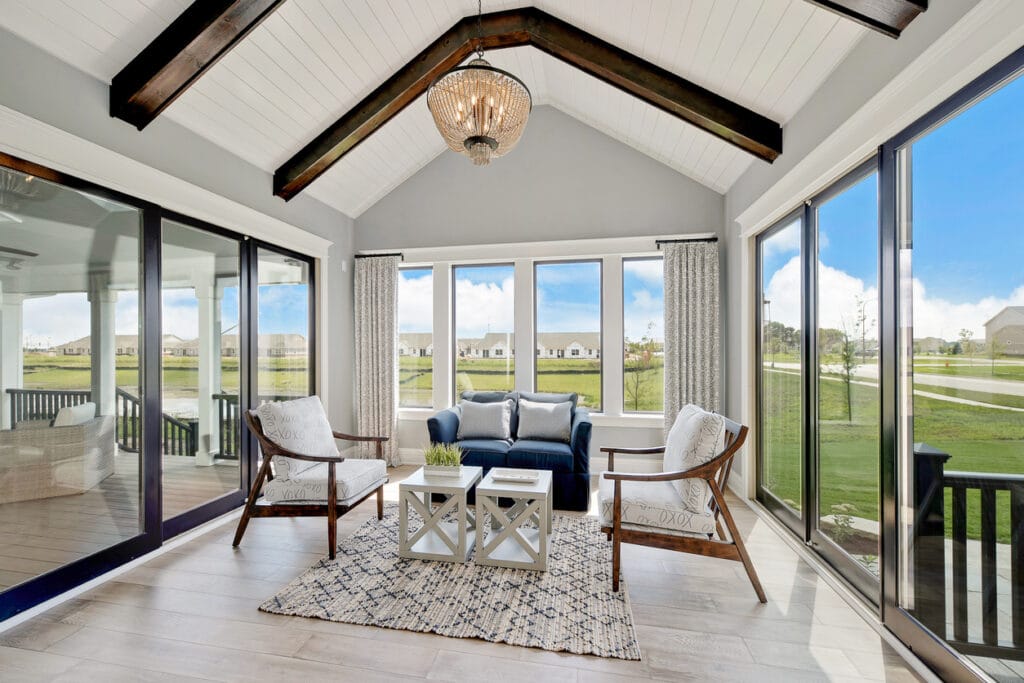
- Sunroom Additions: A high-quality, four-season sunroom addition cost in Northern Virginia typically ranges from $60,000 to $120,000. These rooms include full HVAC integration and high-efficiency glass, offering a year-round retreat with a 45% to 55% ROI.
- Garage Additions & Conversions: Constructing a new, attached two-car garage generally costs between $100,000 and $160,000. For those maximizing existing space, converting garage additions into a finished home office or “in-law suite” averages $45,000 to $85,000, providing a practical solution for multi-generational living.
- Primary Suite Additions: Often the most impactful project for resale, a luxury primary suite featuring a walk-in closet and spa-like bath typically sees a home addition cost of $160,000 to $300,000. These projects offer a robust 60% to 65% cost recoup at resale.
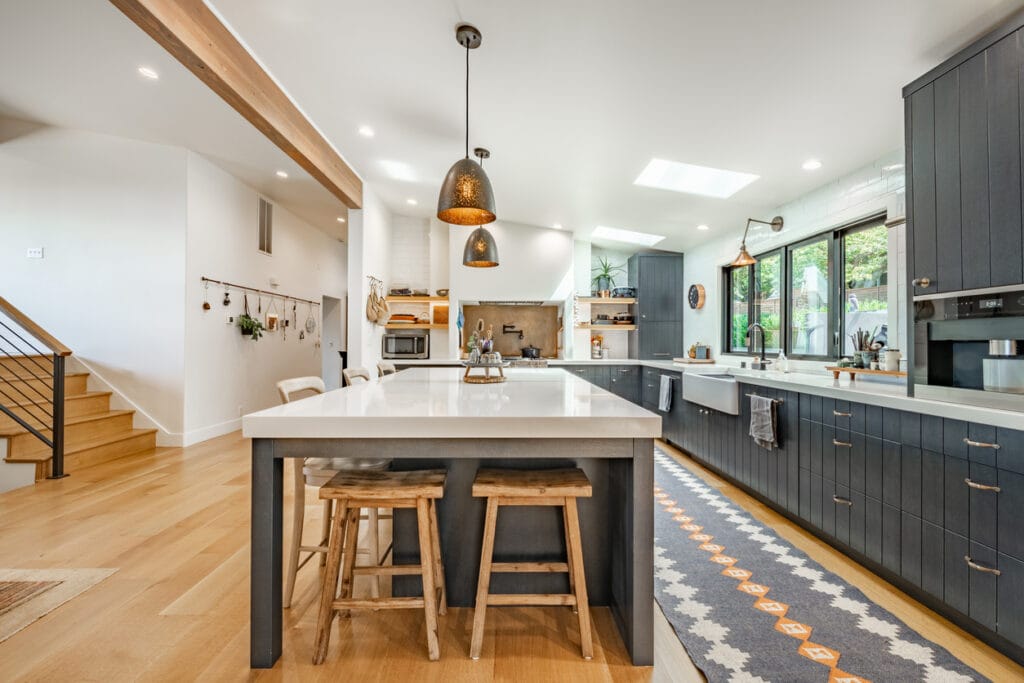
- Kitchen & Family Room Expansions: Creating an open-concept “heart of the home” often requires structural bump-outs. Expect to invest $125,000 to $250,000+ for expansions that involve professional-grade appliances, custom cabinetry, and significant plumbing or electrical relocation.
By choosing a targeted expansion, you can often achieve the functionality of a new home discounted the cost of moving.
What Does It Really Cost to Move in Northern Virginia?
Before deciding whether it is better to move or add on, you must account for the “exit and entry” costs of a real estate transaction. In 2026, the cost to move in Northern Virginia is often a six-figure barrier that many homeowners underestimate.
When you sell your current property, the financial friction includes:
- Realtor Commissions: A standard 5–6% commission on a median-priced home in Fairfax or Arlington ($750,000) immediately removes $37,500 to $45,000 from your equity.
- Closing Costs: Sellers typically face an additional 2–3% in closing costs, covering transfer taxes and settlement fees.
- Logistics & Moving: Professional moving services for a 3–4 bedroom home in the DMV area average between $2,500 and $5,000, excluding storage or packing supplies.
- The “New Home” Premium: With Loudoun and Fairfax median prices remaining high, trading up to a larger home often involves a higher interest rate and a significantly larger mortgage.
Relocating can easily consume 10% of your home’s value in sunk costs. By staying put and expanding, that capital can be reinvested directly into your property’s appraisal value, making a renovation the more strategic financial play.
Financial Comparison: Home Addition vs Buying a New Home
When analyzing a home addition vs moving, the most critical variable in 2026 is the “Interest Rate Lock-In” Most Northern Virginia homeowners are currently holding mortgages below 4%. Trading that for a new 30-year fixed rate currently averaging 6.13% on a much larger principal creates a massive monthly deficit.
Consider this 5-year financial scenario:
- The Moving Path: Selling your $850,000 Fairfax home and “trading up” to a $1.2M property costs roughly $85,000 in transactional fees (10% of value). At a 6.13% interest rate, your new monthly P&I payment could jump by $2,800+.
- The Addition Path: Investing a Northern Virginia home addition cost of $250,000 into a primary suite and kitchen expansion. If financed through a second mortgage or HELOC at 8%, your total monthly increase is approximately $1,800, while you preserve your sub-4% primary mortgage.
Over five years, the “Stay and Build” option saves over $60,000 in interest and fees while directly increasing your home’s basis. Furthermore, home additions in high-demand areas like Arlington typically see a 70% to 85% cost-to-value return. Because Northern Virginia values are forecast to appreciate 2–4% annually through 2027, you aren’t just spending money; you are capturing equity in a stabilized market without the friction of a bidding war.
When Is It Better to Move Instead of Add On?
While staying put is often the smarter financial play, there are specific scenarios where it is better to move or add on a new property. Objectivity is key: if your project costs push your home’s value significantly above the “neighborhood ceiling” you risk a low appraisal that makes financing difficult and limits future resale profit.
Additionally, physical and legal barriers can halt an expansion before it starts. In parts of Arlington, strict historic district regulations or restrictive lot coverage limits may legally prevent any increase in your home’s footprint. Similarly, if your home has severe structural deficiencies or a foundation that cannot support a second story, the cost of remediation may exceed the price of simply buying a larger, move-in-ready home in Fairfax or Loudoun.
Choosing the Right Home Addition Contractors in Northern Virginia
Selecting the correct home addition contractors is the difference between a seamless expansion and a financial headache. When searching for home addition contractors near me, prioritize a design-build approach. This model is significantly lower risk than the traditional bid-build method because it integrates architectural design with construction under one roof, preventing costly “change orders” and communication gaps between architects and builders.
Navigating Northern Virginia’s bureaucracy requires a local expert fluent in the specific permit portals for each jurisdiction:
- Fairfax County: Expertise in the PLUS (Planning and Land Use System) portal.
- Loudoun County: Familiarity with the Loudoun Online Land Applications (LOLA).
- Arlington County: Proficiency in the Permit Arlington digital platform.
A typical major project—from breaking ground to the final inspection—takes 4 to 8 months. A seasoned contractor will manage these specific county-level inspections to ensure your project remains on schedule and within budget.
Final Verdict: Better to Move or Add On in Northern Virginia?
Deciding whether it is better to move or add on in Northern Virginia ultimately balances current equity against future lifestyle needs. If your priority is preserving a low-interest mortgage and avoiding the $80,000+ “transactional tax” of selling in Fairfax or Arlington, then staying put is the superior financial play. A strategic expansion allows you to bypass the stress of limited inventory while custom-building the exact functionality your family requires.
However, if your current lot has hit its zoning ceiling or you’re seeking an entirely different neighborhood vibe in Loudoun County, moving may be your only path forward. In the 2026 market, the home addition vs moving debate favors the homeowner who builds; you aren’t just adding square footage, you’re securing a high-ROI investment in one of the nation’s most stable real estate markets.
Ready to see what’s possible for your property? Contact our expert design-build team today for a comprehensive consultation and a detailed estimate on your Northern Virginia home addition.
FAQs
Disclaimer: Estimates for Planning Purposes Only
The cost projections provided herein are intended solely as a conceptual guide for Northern Virginia homeowners. These figures represent broad market averages and must not be treated as final or actual project costs. Due to the bespoke nature of home addition construction, final pricing is dictated by specific variables—including site conditions, structural requirements, supply chain volatility, and local labor availability—that cannot be calculated without a professional assessment. Every project is unique; therefore, these numbers serve only to inform your initial research and do not constitute a formal quote or financial guarantee. For a legally binding estimate tailored to your specific property and design goals, a professional on-site consultation is required.